
What Is the Difference Between a 550W and 750W Mixer Grinder?
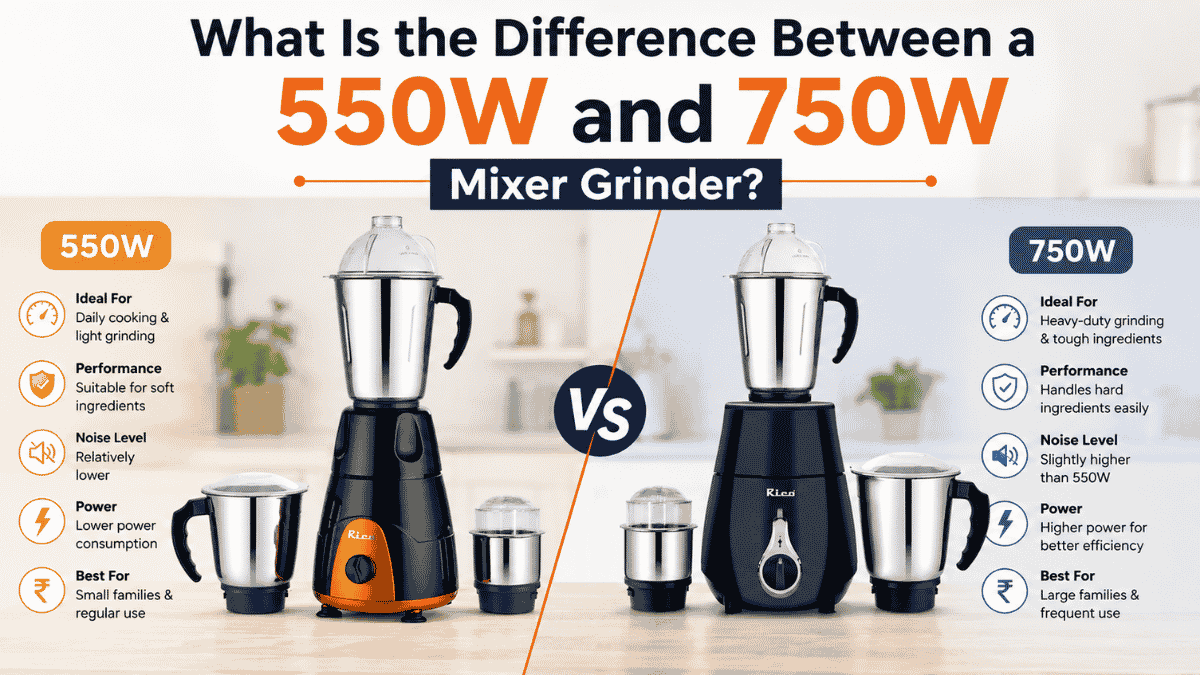
Buying a mixer grinder often comes down to one confusing question: should you choose 550W or 750W? The wattage difference seems small on paper, but it significantly affects performance in daily kitchen use.
This guide breaks down the difference between 550W and 750W mixer grinders, helping you understand which one truly fits your cooking habits.
Understanding Wattage in Mixer Grinders
Wattage indicates how much power the motor consumes and, consequently, how much force it can generate. Higher wattage generally means stronger grinding capability and faster processing.
However, more watts don't always mean "better" for every household. Therefore, understanding your actual cooking needs matters just as much as comparing raw power numbers.
What Does a 550W Mixer Grinder Offer?
A 550W mixer grinder is considered an entry-to-mid-level option, suitable for everyday household tasks. It handles routine jobs like making chutneys, grinding spices, and blending smoothies efficiently.
This wattage works well for small to medium-sized families with moderate daily cooking needs. Moreover, 550W models are generally more affordable and consume less electricity over time.
What Does a 750W Mixer Grinder Offer?
A 750W mixer grinder delivers noticeably more power, making it better suited for heavy-duty grinding tasks. It handles dense ingredients like whole spices, dry lentils, and thick batters with greater ease.
In addition, higher wattage means faster processing times, which is useful for larger families or those who cook in bigger batches regularly. However, this added power usually comes with a higher price tag and slightly more energy consumption.
550W vs 750W Mixer Grinder: Side-by-Side Comparison
|
Factor |
550W Mixer Grinder |
750W Mixer Grinder |
|
Power Output |
Moderate |
High |
|
Best For |
Light to medium grinding tasks |
Heavy-duty, dense ingredients |
|
Processing Speed |
Standard |
Faster |
|
Ideal Household Size |
Small to medium families |
Medium to large families |
|
Price Range |
More affordable |
Slightly higher |
|
Electricity Consumption |
Lower |
Comparatively higher |
|
Motor Durability Under Load |
Adequate for regular use |
Better suited for frequent heavy use |
This table highlights that your choice should align with how often and how heavily you cook, rather than simply picking the higher number.
Performance Differences You'll Notice in Daily Use
The wattage gap becomes most noticeable with tougher ingredients. A 550W grinder may take longer or require multiple attempts to grind hard spices or dry dal smoothly.
A 750W model, on the other hand, powers through these tasks more efficiently, producing finer, more consistent textures in less time. Therefore, if your cooking involves frequent heavy grinding, the extra wattage pays off in convenience.
Which Wattage Suits Which Household?
Choosing between 550W and 750W often depends on household size and cooking frequency:
550W is ideal if you:
-
Cook for 2–4 people regularly
-
Mostly prepare chutneys, purees, and light batters
-
Want a budget-friendly, energy-efficient option
-
Don't grind very hard or dense ingredients often
750W is ideal if you:
-
Cook for larger families or joint households
-
Frequently grind whole spices or dry lentils
-
Prepare dosa or idli batter in bulk regularly
-
Prioritize speed and consistent heavy-duty performance
Motor Durability and Long-Term Use
Higher wattage motors, like those in 750W models, generally handle continuous heavy use with less strain. This can translate to better long-term durability if you frequently grind tough ingredients.

However, a 550W motor, when used within its intended capacity, can also last for years without issues. Ultimately, matching the motor's capability to your actual usage prevents unnecessary wear on either model.
Other Factors Beyond Wattage
While wattage is important, it's not the only factor to consider when buying a mixer grinder:
-
Jar material - stainless steel jars are more durable than plastic
-
Number of speed settings - more options offer better control
-
Jar capacity - check if it matches your typical batch sizes
-
Noise levels - higher wattage motors can sometimes be louder
-
Warranty coverage - longer warranties often indicate better build confidence
Considering these alongside wattage ensures a more well-rounded purchase decision.
How This Compares to Other Kitchen Appliance Choices
The power-versus-need trade-off isn't unique to mixer grinders. It shows up across kitchen appliances, where more power isn't always the right answer for every household.
For instance, our comparison of wet grinder vs mixer grinder explores a similar decision between different grinding technologies suited to different needs. Likewise, our guide on centrifugal vs slow juicer shows how speed and processing power affect results differently depending on what you're preparing.
Matching Appliances to Your Kitchen Routine
Choosing the right appliance often comes down to matching effort and output to your actual routine, not just specs on a box. Our comparison of manual vs electric vegetable choppers follows this same principle, weighing convenience against control for everyday kitchen prep.
Building a Well-Equipped Kitchen
If you're setting up your kitchen with appliances that complement each other, our guide to essential kitchen products offers a helpful starting point for planning your full appliance lineup.
Portability and Convenience Considerations
Beyond raw power, everyday convenience matters too. Just as a portable fan is valued for being lightweight and easy to move around, a mixer grinder's size, weight, and ease of cleaning affect how often you'll actually use it.
Maintenance Tips for Mixer Grinders
Regardless of wattage, proper care extends your mixer grinder's lifespan:
-
Avoid overloading jars beyond the recommended capacity
-
Let the motor rest between long grinding sessions
-
Clean blades and jars immediately after each use
-
Check for loose lids or jar seals periodically
These habits help maintain consistent performance over years of regular use.
Conclusion
The core difference between a 550W and 750W mixer grinder comes down to power, speed, and suitability for heavy-duty tasks. A 550W model works well for smaller households with lighter grinding needs, while a 750W model suits larger families or frequent heavy-duty cooking.
Beyond wattage, factors like jar material, speed settings, and warranty also influence your final decision. Ultimately, choosing the right mixer grinder means matching its power to your actual cooking habits, not just picking the highest number available.
FAQs
1. Is a 750W mixer grinder always better than a 550W one?
Not necessarily. A 750W model suits heavy-duty grinding and larger families, while a 550W model is sufficient for lighter, everyday tasks.
2. Does higher wattage mean more electricity consumption?
Generally, yes. A 750W mixer grinder consumes slightly more electricity than a 550W model, especially with frequent heavy use.
3. Can a 550W mixer grinder handle dry grinding tasks?
Yes, but it may take longer or require multiple attempts for very hard or dense ingredients compared to a 750W model.
4. Which wattage is better for a small family?
A 550W mixer grinder is usually sufficient for small to medium families with moderate daily cooking needs.
5. Does a 750W mixer grinder last longer than a 550W one?
Not automatically. Durability depends on build quality and usage patterns, though higher-wattage motors handle heavy loads with less strain.