
Centrifugal vs Slow Juicer: Which Should You Buy?
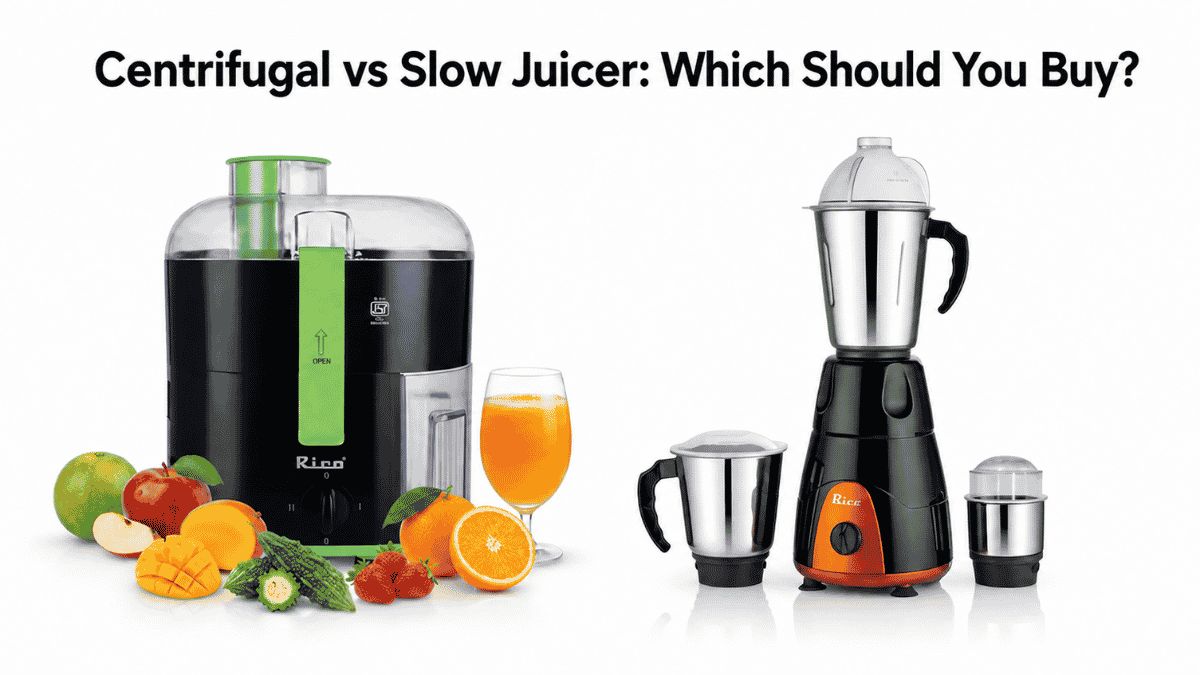
Fresh juice has become a popular part of healthy lifestyles, and choosing the right juicer can make a significant difference in convenience, juice quality, and overall value. If you're planning to invest in juicer machine electric , you'll likely come across two main options: centrifugal juicers and slow juicers.
While both are designed to extract juice from fruits and vegetables, they use different technologies and deliver different results. Understanding these differences can help you choose a juicer that aligns with your health goals, budget, and daily routine.
What Is a Centrifugal Juicer?

A centrifugal juicer uses high-speed spinning blades to shred fruits and vegetables before separating the juice from the pulp through centrifugal force.
These juicers are known for their speed and convenience, making them popular among busy households.
Benefits of Centrifugal Juicers
Fast juice extraction
Affordable pricing
Easy to use
Suitable for most fruits and vegetables
Ideal for beginners
Limitations
Generates more heat during extraction
May produce slightly less juice
Can create more foam
Not ideal for leafy greens
If convenience and quick preparation are your priorities, a centrifugal juicer is often a practical choice.
What Is a Slow Juicer?

A slow juicer, also known as a masticating juicer, extracts juice by slowly crushing and pressing ingredients.
Unlike centrifugal models, slow juicers operate at lower speeds, which helps minimize heat generation and oxidation.
Benefits of Slow Juicers
Higher juice yield
Better nutrient retention
Less foam
Longer-lasting juice freshness
Excellent for leafy greens and soft fruits
Limitations
Slower extraction process
Higher upfront cost
More parts to clean
Takes longer to prepare juice
Slow juicers are often preferred by health-conscious users who prioritize juice quality over speed.
Centrifugal vs Slow Juicer: Key Differences
Feature |
Centrifugal Juicer |
Slow Juicer |
Speed |
Fast |
Slow |
Juice Yield |
Good |
Higher |
Nutrient Retention |
Moderate |
Excellent |
Noise Level |
Higher |
Lower |
Foam Production |
More |
Less |
Cleaning |
Easier |
Moderate |
Price Range |
Lower |
Higher |
Best For |
Busy users |
Health-focused users |
Leafy Greens |
Moderate |
Excellent |
Juice Shelf Life |
Shorter |
Longer |
Popular Rico Juicer Machine Electric Options
If you're exploring an juicer machine electric, comparing available products can help you identify the right model based on your budget and requirements.
Before choosing a juicer, it's worth browsing Rico's Kitchen Appliances Collection to compare features across multiple food preparation appliances.
Rico Juicer & Mixer Options
Product |
Type |
Price* |
Best For |
Mixer Grinder |
₹4,800 |
Daily juice preparation and grinding |
|
Multi-purpose Appliance |
₹9,000 |
Juice extraction and food prep |
|
Personal Blender |
₹2,499 |
Smoothies, shakes, and juices |
|
Heavy-Duty Appliance |
₹6,999 |
Large families and frequent use |
*Prices may vary based on offers and availability.
Looking for a versatile appliance that can handle juicing, grinding, and blending? Explore Rico's Mixer Grinder Collection for multi-functional kitchen solutions.
Which Juicer Produces Better Juice?
When comparing juice quality, slow juicers generally have the advantage.
Because they operate at lower speeds, they generate less heat and expose the juice to less air. This can help preserve nutrients and maintain freshness for a longer period.
Slow Juicer Advantages
Better extraction efficiency
Richer texture
Longer freshness
Improved nutrient preservation
However, centrifugal juicers still produce high-quality juice suitable for everyday consumption.
For most households, the difference may not be significant enough to outweigh the convenience benefits of a centrifugal model.
Which Juicer Is More Convenient?
Convenience is where centrifugal juicers typically shine.
Centrifugal juicers are better for:
Busy mornings
Quick juice preparation
First-time buyers
Families with limited time
Slow juicers are better for:
Dedicated health enthusiasts
Daily juicing routines
Green juices
Long-term juice storage
If your primary goal is speed, a centrifugal juicer will likely meet your expectations.
Factors to Consider Before Buying an Electric Juicer Machine
1. Frequency of use
If you plan to juice every day, investing in a higher-quality appliance can be worthwhile.
2. Ingredients you use most
Fruits: Both options perform well.
Leafy greens: Slow juicers are generally better.
Hard vegetables: Both are effective.
3. Cleaning requirements
Centrifugal juicers typically have fewer components and are easier to clean.
4. Budget
Budget plays a significant role in determining which juicer is right for you.
5. Kitchen space
Consider countertop space and storage availability before purchasing.
Enhance Your Kitchen with Multi-Functional Appliances
Many homeowners prefer appliances that can perform multiple functions rather than purchasing separate devices for every task.
For example, a Rico Nutri Fresh Blender & Mixer Grinder can handle smoothies, blending, grinding, and basic juice preparation, making it a practical addition to modern kitchens.
Similarly, the Rico Mixer Grinder MG1803 offers versatility for everyday food preparation needs.
Suggested Internal Links
Mixer Grinder Collection
Rico Nutri Fresh Blender & Mixer Grinder
Kitchen Appliances Collection
Are Slow Juicers Worth the Extra Cost?
The answer depends on your priorities.
A slow juicer may be worth it if:
You juice daily.
You prioritize nutrient retention.
You frequently make green juices.
You don't mind spending more.
A centrifugal juicer may be better if:
You need quick results.
You're buying your first juicer.
You have a limited budget.
You prefer simple maintenance.
For many households, convenience often outweighs the marginal nutritional differences.
Ready to Upgrade Your Juicing Experience?
Whether you're looking for a dedicated juicer or a versatile appliance that can blend, grind, and juice, choosing the right kitchen equipment can make healthy living more convenient.
Explore Rico's Kitchen Appliances Collection to discover practical solutions designed for modern kitchens and everyday food preparation.
Conclusion
Both centrifugal and slow juicers offer unique benefits. Centrifugal juicers are fast, convenient, and affordable, making them ideal for busy households and first-time buyers. Slow juicers excel in juice quality, nutrient retention, and extraction efficiency, making them suitable for users who prioritize health and freshness.
The best juicer machine ultimately depends on your lifestyle, budget, and juicing habits. By understanding the differences between these technologies and evaluating your needs, you can confidently choose an appliance that delivers the best value for your kitchen.
FAQs
1. What is the difference between a centrifugal and a slow juicer?
A centrifugal juicer uses high-speed blades to extract juice quickly, while a slow juicer crushes and presses ingredients at lower speeds for higher juice yield and nutrient retention.
2. Which electric juicer machine is better for beginners?
Centrifugal juicers are generally better for beginners because they are affordable, easy to use, and faster to operate.
3. Do slow juicers retain more nutrients?
Slow juicers typically retain more nutrients because they generate less heat and oxidation during the extraction process.
4. Which juicer is easier to clean?
Most centrifugal juicers are easier and quicker to clean due to their simpler design and fewer components.
5. Is a juicer mixer grinder a good alternative to a dedicated juicer?
Yes. A juicer mixer grinder can provide juicing, blending, and grinding functions in one appliance, making it a practical choice for many households.