
Food Processor Parts and Functions: A Complete Breakdown
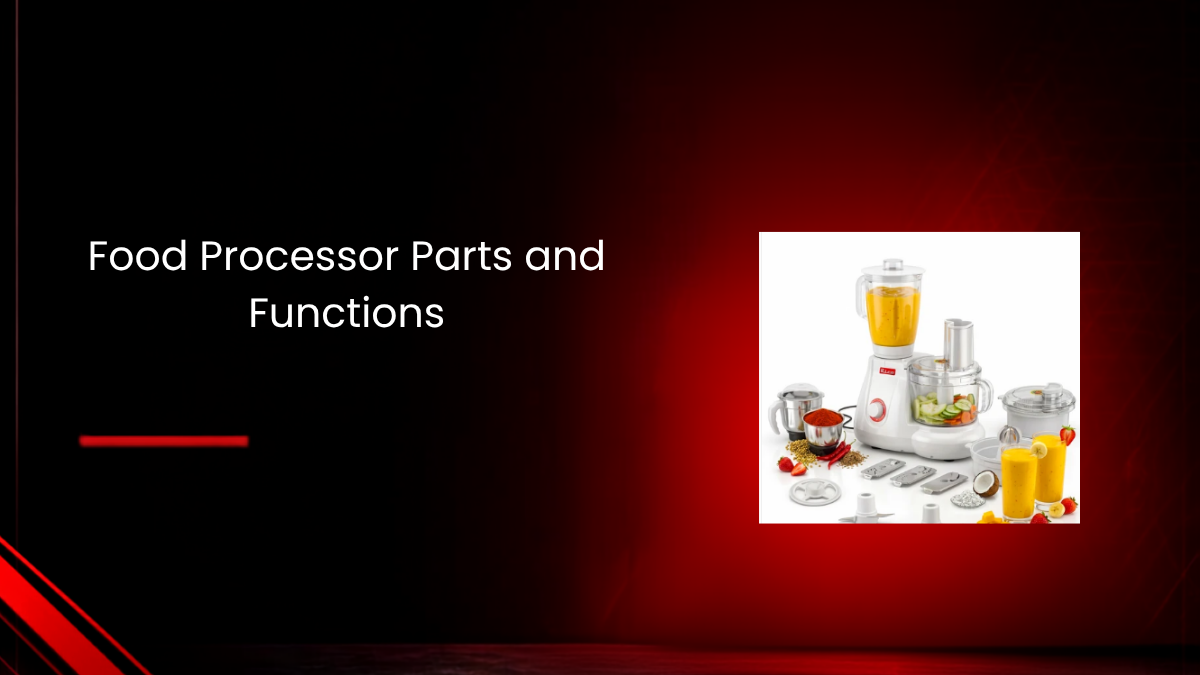
A food processor looks simple on the outside, just a base, a bowl, and a lid. But understanding food processor parts and functions reveals just how much versatility is packed into this single appliance.
From chopping onions to kneading dough, each component plays a specific role. Knowing food processor parts and functions helps you use the right attachment for the right task, instead of relying on just one blade for everything.
This guide breaks down every major component, what it does, and how to use it effectively, so you get the most out of your food processor. If you're shopping for one, Rico's range of kitchen appliances is worth exploring for a model that fits your needs.
What Is a Food Processor?
A food processor is a motorised kitchen appliance designed to chop, slice, shred, and puree ingredients quickly and consistently. It uses a powerful base motor to spin various attachments inside a sealed work bowl.
Unlike a blender, which is built mainly for liquefying, a food processor handles solid and semi-solid ingredients with far more precision. This distinction is central to understanding food processor parts and functions and how each piece contributes to that versatility.
Core Food Processor Parts and Functions
Let's walk through the essential components found in most home food processors.

1. Motor Base
The motor base is the foundation of the appliance, housing the electric motor that powers every attachment. It typically includes speed settings and a pulse function for short bursts of power.
A stronger motor base handles denser ingredients, like dough or hard vegetables, more efficiently. If you're comparing motor power across kitchen appliances, our breakdown of the difference between 550W and 750W mixer grinders explains how wattage affects overall performance. This principle applies to food processors too.
2. Work Bowl
The work bowl sits atop the motor base and holds the ingredients during processing. Most home models use clear plastic bowls, letting you monitor the texture as you work without stopping the machine.
Bowl capacity varies by model, so choosing the right size depends on how much you typically prepare at once, whether that's a small batch of chutney or a larger quantity of dough.
3. Lid and Feed Tube
The lid seals the bowl securely during operation, doubling as a safety mechanism that prevents the machine from running unless properly closed. Most lids include a feed tube, a narrow opening that lets you add ingredients while the processor is running.
Some feed tubes include a smaller inner tube for thin items like carrots, alongside a wider opening for bulkier ingredients. This design is one of the more practical food processor parts and functions worth understanding, since it directly affects how much prep work you can skip.
4. Pusher
The pusher is a plastic tool that fits into the feed tube, guiding ingredients safely down toward the blades. It protects your fingers from the sharp blades below while ensuring consistent, even processing.
Always use the pusher rather than your hands when feeding ingredients through the tube. This small component plays a genuinely important safety role.
5. S-Blade (Multipurpose Blade)
The S-blade, named for its curved, S-shaped design, is the primary blade included with most food processors. It handles chopping, pureeing, and mixing tasks, making it the most frequently used attachment.
This blade works well for finely chopping herbs, pureeing cooked vegetables into soups, or blending ingredients for sauces and dips.
6. Dough Blade
Some food processors include a dedicated dough blade, designed with blunter edges specifically for kneading. This attachment mixes and develops gluten in bread or pizza dough without over-processing the mixture.
If you frequently bake at home, this attachment can save significant time compared to hand-kneading.
7. Slicing Disc
The slicing disc produces even, consistent slices of vegetables, fruits, or cheese. Thickness settings vary by model, letting you choose thinner slices for salads or thicker cuts for stir-fries.
This attachment saves considerable time compared to manual slicing, especially when prepping larger quantities. If you're deciding between manual and electric prep tools more broadly, our comparison of manual vs electric vegetable choppers explores similar time-saving trade-offs.
8. Shredding Disc
The shredding disc creates uniform shreds, ideal for grating cheese, cabbage, or carrots. This attachment is particularly useful for recipes like coleslaw or dishes requiring shredded cheese as a topping.
9. Whisk Attachment
Certain food processor models include a whisk attachment for aerating cream, egg whites, or light batters. While not as powerful as a dedicated stand mixer, it handles smaller whisking tasks conveniently.
If you're curious about how similar attachments function in other kitchen appliances, our guide on what a whip in a mixer grinder does explains a comparable whisking mechanism used for eggs and cream.
How These Parts Work Together
Understanding individual food processor parts and functions is useful, but seeing how they work together clarifies the appliance's real value. The motor base powers the chosen attachment, the work bowl contains the ingredients, and the lid with its feed tube allows continuous addition of items during processing.
This combination lets you move seamlessly between tasks, chopping vegetables, then switching to the dough blade for kneading, all within the same appliance and without needing separate tools for each job.
Food Processor vs Mixer Grinder: Key Differences
Since both appliances handle food preparation, it's worth clarifying how they differ before deciding which one your kitchen actually needs.
|
Factor |
Food Processor |
Mixer Grinder |
|
Core strength |
Solid-state prep work - slicing, shredding, dough kneading |
Grinding spices, batters, and chutneys |
|
Design |
Wide bowl with interchangeable attachments (blades, discs) |
Multiple jars suited to specific wet and dry tasks |
|
Best suited for |
Western and multi-cuisine prep, baking, salads |
Everyday Indian cooking - masalas, chutneys, batters |
|
Common in |
International and modern kitchens |
Indian households |
|
Texture output |
Uniform slices, shreds, or kneaded dough |
Fine to coarse pastes and powders |
For a deeper look at how texture and function differ between grinding-based appliances, our comparison of wet grinder vs mixer grinder breaks this down further.
If you already own a mixer grinder and are curious about its broader capabilities, our guide on how to use a juicer mixer grinder walks through the different jar functions that complement what a food processor offers.
Maintenance Tips for Each Component
Understanding food processor parts and functions also means knowing how to care for each piece properly.
-
Wash the work bowl, lid, and blades immediately after use to prevent food residue from drying and sticking.
-
Handle blades carefully during cleaning, since they remain sharp even after use.
-
Dry all parts thoroughly before reassembling to prevent moisture buildup inside the motor base.
-
Store blades and discs in a designated case or holder to avoid accidental cuts while reaching into a drawer.
-
Check the motor base periodically for dust buildup, wiping it with a dry cloth rather than submerging it in water.
Following these habits keeps each component functioning smoothly and extends the appliance's overall lifespan.
Choosing the Right Food Processor for Your Needs
When shopping for a food processor, understanding food processor parts and functions helps you evaluate models more intelligently rather than choosing based on price alone.
-
Motor power: Stronger motors handle dense ingredients like dough more effectively.
-
Bowl capacity: Match the size to your typical batch quantities, whether cooking for one or a larger family.
-
Included attachments: More attachments mean more versatility, but only if you'll actually use them regularly.
-
Ease of cleaning: Dishwasher-safe components save considerable time on daily cleanup.
If you're weighing similar buying considerations for other kitchen appliances, our guide on how to choose the right mixer grinder offers a helpful framework that applies broadly across appliance shopping decisions.
Common Mistakes to Avoid
Even experienced home cooks sometimes misuse certain food processor parts and functions. Avoid these common errors.
-
Overfilling the work bowl: This prevents even processing and can strain the motor.
-
Using the wrong blade for the task: The S-blade isn't ideal for kneading dough, just as the dough blade won't chop vegetables effectively.
-
Skipping the pusher: Feeding ingredients by hand risks injury and uneven results.
-
Ignoring the pulse function: Continuous processing can over-blend ingredients that need a coarser texture, like salsa or chunky dips.
Building a Well-Equipped Kitchen
A food processor works well alongside other essential kitchen appliances. If you're planning your broader kitchen setup, our roundup of kitchen products covers additional everyday essentials worth considering for a fully equipped, efficient kitchen.
Final Thoughts
Understanding food processor parts and functions transforms this appliance from a single-task chopper into a genuinely versatile kitchen tool. Each component, from the motor base to the various blades and discs, plays a specific role in helping you prep faster and more consistently.
Once you know which attachment suits which task, you'll find yourself reaching for your food processor far more often, saving time on everything from weeknight dinners to weekend baking projects.
Frequently Asked Questions
Q1. What is the most commonly used food processor blade?
The S-blade, also called the multipurpose blade, is the most frequently used attachment, handling chopping, pureeing, and mixing tasks for a wide range of recipes.
Q2. Can I use a food processor to knead dough?
Yes, if your model includes a dedicated dough blade. This blunter attachment mixes and develops gluten effectively without over-processing the dough.
Q3. What's the difference between a slicing disc and a shredding disc?
A slicing disc produces even, flat slices of vegetables or cheese, while a shredding disc creates uniform shreds, ideal for tasks like grating cheese or shredding cabbage.
Q4. Why does my food processor have a feed tube on the lid?
The feed tube allows you to add ingredients while the machine is running, without needing to stop and remove the lid, saving time during continuous processing tasks.
Q5. How do I clean food processor parts safely?
Wash the bowl, lid, and blades immediately after use, handling blades carefully since they remain sharp. Dry all components thoroughly before reassembling and storing.