
How to Use a Juicer Mixer Grinder: A Complete Beginner's Guide
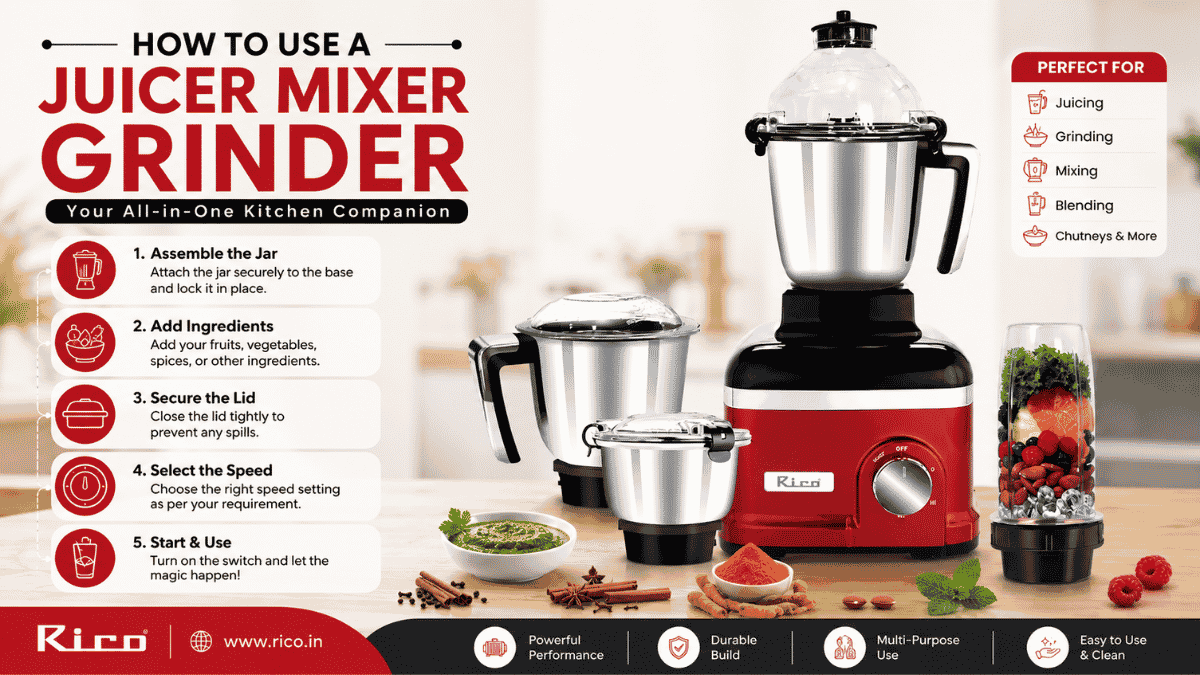
A juicer mixer grinder (JMG) is one of the most versatile appliances in an Indian kitchen. It juices fruits, grinds spices, and blends chutneys, all in one compact machine.
However, many first-time users feel overwhelmed by the multiple jars, blades, and speed settings. This guide explains how to use a juicer mixer grinder correctly, so you get the best results safely and efficiently.
Understanding the Basic Components
Before using your JMG, it helps to know its main parts. Most models include a motor base, multiple jars (usually for grinding, juicing, and blending), various blade attachments, and a speed control dial.
Each jar serves a specific purpose. Therefore, using the wrong jar for a task can affect performance or even damage the blades over time.
Step 1: Assemble the Machine Correctly
Start by placing the motor base on a flat, stable surface. Ensure it's unplugged before assembling any jars or blades.
Attach the appropriate jar securely onto the base, making sure it locks into place. Most machines won't operate unless the jar is properly aligned, which is a built-in safety feature.
Step 2: Choose the Right Jar for Your Task
Selecting the correct jar matters more than most beginners realize. Here's a quick breakdown:
-
Grinding jar - best for dry spices, chutneys, and small batches
-
Liquidizing jar - ideal for smoothies, milkshakes, and soups
-
Juicer attachment - designed specifically for extracting fruit and vegetable juice
-
Chutney jar (if included) - perfect for small quantities of wet grinding
Using the wrong jar, such as juicing in a grinding jar, can lead to poor results or unnecessary strain on the motor.
Step 3: Add Ingredients Properly
Never overfill any jar beyond its maximum fill line. Overloading strains the motor and can cause uneven blending or grinding.
For dry grinding, add ingredients like spices or lentils in small batches. For liquidizing, ensure there's enough liquid to help blades move freely without struggling.
Step 4: Select the Right Speed Setting
Most juicer mixer grinders offer multiple speed settings, typically ranging from low to high. Start with a lower speed for delicate ingredients and gradually increase if needed.
Higher speeds work well for tougher ingredients like ice or dry spices. However, running the motor at maximum speed unnecessarily can generate excess heat and reduce the appliance's lifespan over time.
Step 5: Operate in Short Bursts
Rather than running the motor continuously, use short bursts, especially for grinding tasks. This prevents overheating and gives you better control over the final texture.
For juicing, feed produce steadily through the chute rather than forcing large chunks in at once. This ensures smoother extraction and prevents jamming.
Step 6: Switch Off and Let It Rest
After each use, especially during heavy grinding, allow the motor to rest for a few minutes before running it again. This prevents overheating and protects the motor's long-term performance.
Additionally, always switch off and unplug the machine before removing or changing jars, as a basic safety precaution.
Common Mistakes to Avoid
Many beginners make avoidable errors that reduce appliance performance or lifespan. Watch out for these:
-
Overloading jars beyond the recommended capacity
-
Running the motor continuously without breaks during heavy tasks
-
Using the wrong jar for a specific ingredient type
-
Adding hot liquids directly into jars not designed for heat
-
Ignoring unusual noises, which often signal blade or motor issues
Avoiding these mistakes ensures consistent results and a longer-lasting machine.

If your JMG includes a juicer attachment, follow these steps for best results:
1. Wash and cut fruits or vegetables into manageable pieces
2. Attach the juicer unit securely to the motor base
3. Feed produce gradually through the chute using the pusher
4. Collect juice and pulp separately as they exit different outlets
5. Clean the juicer attachment immediately after use
This process ensures efficient extraction while protecting the appliance from residue buildup.
How to Grind Spices Effectively
For dry grinding, use the smaller grinding jar rather than the larger liquidizing jar. Add spices in small batches, and pulse the machine in short bursts rather than continuous runs.
This technique produces a finer, more even grind while reducing heat buildup that can affect spice flavor and aroma.
Cleaning and Maintenance Tips
Proper cleaning extends your juicer mixer grinder's lifespan significantly. Consider these habits:
-
Rinse jars immediately after use to prevent residue from hardening
-
Avoid submerging the motor base in water
-
Dry all jars and blades thoroughly before storing
-
Periodically check blade sharpness and jar seals for wear
These simple steps help maintain hygiene and consistent performance over time.
Comparing JMGs to Other Kitchen Appliances
Understanding how a JMG performs different tasks helps when comparing it to specialized appliances. For instance, our guide on wet grinder vs mixer grinder explains when a dedicated wet grinder outperforms a standard mixer grinder for certain batters and pastes.
Similarly, if you're deciding whether your JMG's juicing attachment is enough or whether you need a dedicated juicer, our comparison of centrifugal vs slow juicer breaks down the differences in nutrient retention and extraction quality.
Choosing Complementary Kitchen Tools
A juicer mixer grinder works best alongside other prep tools. Our breakdown of manual vs electric vegetable choppers explores how to balance convenience and control for everyday chopping tasks that complement your JMG usage.
Building a Complete Kitchen Setup
If you're setting up your kitchen with appliances that work well together, our guide to essential kitchen products offers a useful starting point for planning your full lineup.
Convenience Beyond the Kitchen
Ease of use and portability matter across all home appliances, not just kitchen tools. Just as a portable fan is valued for being lightweight and easy to move, a well-designed JMG should be easy to assemble, operate, and store without hassle.
Safety Tips While Using a Juicer Mixer Grinder
Keep these safety practices in mind during use:
-
Always switch off and unplug before changing jars or blades
-
Keep hands away from moving blades, even when the machine appears stopped
-
Never insert utensils into a running jar
-
Keep the appliance out of reach of children during operation
Following these precautions ensures safe, trouble-free use for the whole household.
Explore Rico's Juicer Mixer Grinder Range
If you're looking for a reliable juicer mixer grinder for your kitchen, explore Rico's full appliance range at rico.in.
Conclusion
Learning how to use a juicer mixer grinder correctly comes down to choosing the right jar, adding ingredients properly, and operating the machine in short, controlled bursts. Following manufacturer guidelines around speed settings and jar capacity protects both your ingredients and the appliance itself.
With consistent care and the right technique, a juicer mixer grinder becomes one of the most efficient, versatile tools in your kitchen. Ultimately, understanding its proper use ensures better results and a longer-lasting appliance for years of daily cooking.
FAQs
1. Can I use the same jar for juicing and grinding?
No, most juicer mixer grinders have separate jars or attachments designed specifically for juicing, grinding, and blending tasks.
2. Why does my mixer grinder overheat during use?
Continuous operation without breaks, especially during heavy grinding, can overheat the motor. Use short bursts and let it rest periodically.
3. Can I add hot liquids to the mixer jar?
It's best to avoid adding very hot liquids unless the jar is specifically designed for heat resistance, as it may cause damage.
4. How often should I clean my juicer mixer grinder?
Ideally, clean all removable parts immediately after each use to prevent residue buildup and maintain hygiene.
5. What speed should I use for grinding spices?
Start with a lower speed and gradually increase if needed, using short pulses rather than continuous high-speed grinding.