
How to Make Delicious Soup in a Nutri Blender: A Complete Guide
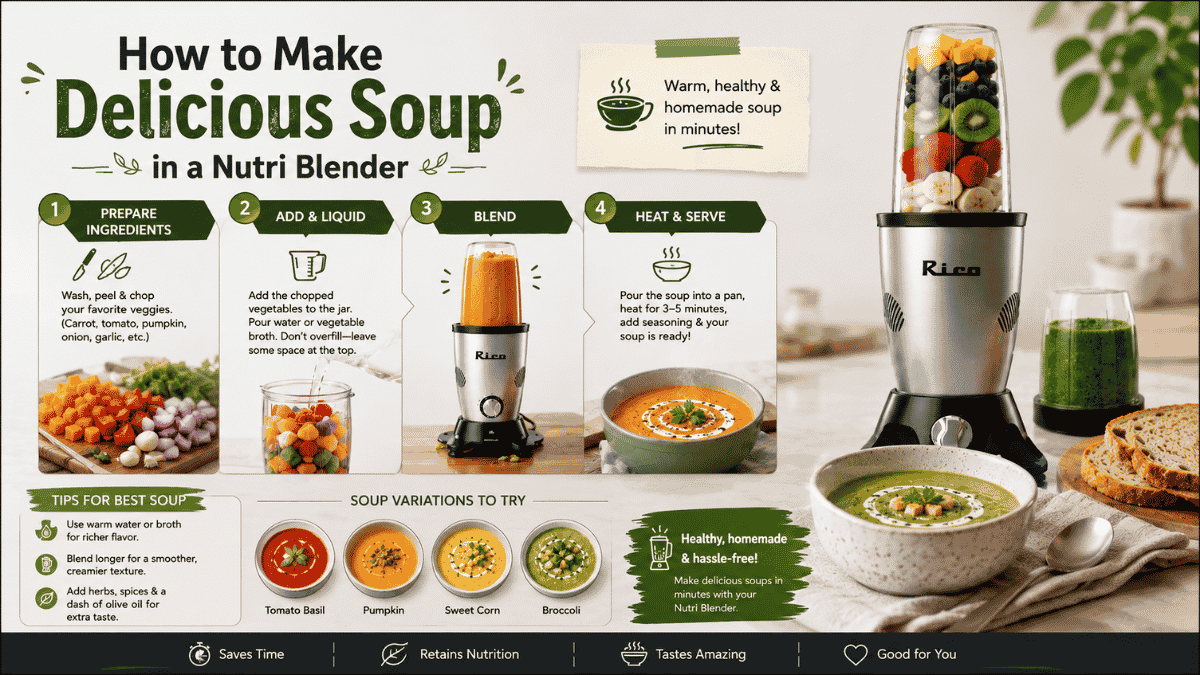
Soup season doesn't need a stove full of pots and pans anymore. If you know how to make delicious soup in a Nutri blender, you can turn fresh vegetables into a warm, creamy bowl in under 15 minutes.
A Nutri blender's powerful motor and sharp blades make it surprisingly good at pureeing soups smoothly. However, getting that restaurant-style texture requires the right technique, not just tossing everything in and pressing blend.
If you're looking for dependable kitchen appliances, Rico offers a wide selection of home and kitchen products, including mixer grinders, blenders, juicers, steam irons, fans, and other everyday appliances. Rico products are designed with powerful performance, durable materials, and user-friendly features to help make cooking and meal preparation faster and more convenient.
This guide walks you through exactly how to make delicious soup in a Nutri blender, step by step, along with expert tips, safety precautions, and answers to common questions.
Why Use a Nutri Blender for Soup?
A Nutri blender is compact, fast, and easy to clean, which makes it a practical choice for everyday cooking. Unlike a traditional pot-based method, blending soup directly in the jar saves time and reduces the number of dishes you need to wash.
Moreover, the high-speed blades break down vegetables into an ultra-smooth consistency, often smoother than what a hand blender or regular mixer can achieve. This is why so many home cooks now prefer to make delicious soup in a Nutri blender rather than mashing everything manually.
If you're comparing this approach to other kitchen appliances you may already own, our guide on slow juicer vs blender explains how blending differs from juicing when it comes to texture and nutrient retention.
What You'll Need Before You Start
Before learning how to make delicious soup in a Nutri blender, gather these basics:
-
Fresh or cooked vegetables of your choice (tomato, carrot, pumpkin, or spinach work well)
-
Warm vegetable or chicken broth
-
Salt, pepper, and herbs of choice
-
A splash of cream or coconut milk, optional
-
Your Nutri blender jar and lid
Having ingredients prepped and roughly chopped in advance makes the blending process much smoother and faster.
Step-by-Step: How to Make Delicious Soup in a Nutri Blender
Step 1: Cook Your Base Vegetables First
Most soups taste better when the vegetables are lightly cooked before blending. Steam, roast, or boil your chosen vegetables until soft. This softens the fibres and makes blending easier on the motor.
Step 2: Let the Liquid Cool Slightly
This step matters more than people realise. Never pour boiling liquid straight into a sealed blender jar, since trapped steam can build pressure and force the lid open unexpectedly.
Instead, let your broth or cooking liquid cool to warm, not boiling, before adding it to the jar. This single precaution is essential whenever you make delicious soup in a Nutri blender.
Step 3: Layer Ingredients Correctly
Add your ingredients in this order for the smoothest blend:
1. Liquid base (warm broth or stock)
2. Softer cooked vegetables
3. Herbs and spices
4. Any cream or thickening ingredient last
This layering helps the blades pull ingredients down evenly, rather than leaving chunks stuck at the top.
Step 4: Blend Gradually
Start on a low speed and gradually increase it. Blend for around 3 to 5 minutes, or until the mixture turns completely smooth. Avoid blending on high speed immediately, since this can splash hot liquid or create air pockets.
Step 5: Check the Consistency
Stop and check the texture halfway through. If the soup feels too thick, add a little more warm broth and blend again briefly until you reach your preferred consistency.
Step 6: Reheat If Needed
If your blended soup has cooled down during the process, transfer it back to the stovetop for a quick warm-up before serving. This keeps the flavours fresh without overcooking the vegetables further.
Tips to Make Delicious Soup in a Nutri Blender Every Time

A few small habits can make a noticeable difference in flavour and texture.
-
Roast vegetables before blending for a deeper, richer taste.
-
Add fresh herbs at the end to preserve their aroma and colour.
-
Use full-fat coconut milk or cream for a richer, restaurant-style finish.
-
Blend in batches if your jar is small, rather than overfilling it.
-
Always leave the lid vent slightly open when blending warm liquids, if your model allows it, to release steam safely.
Following these steps consistently is the real secret to how to make delicious soup in a Nutri blender without ending up with a thin or gritty result.
Popular Soup Ideas to Try
If you're new to blending soups, these combinations are a great starting point.
-
Tomato and basil: Roasted tomatoes, garlic, basil, and a touch of cream
-
Carrot and ginger: Steamed carrots, fresh ginger, and vegetable broth
-
Broccoli and cheese: Steamed broccoli, warm broth, and a handful of cheese
-
Pumpkin and coconut: Roasted pumpkin, coconut milk, and warm spices
-
Spinach and pea: Blanched spinach, peas, and a squeeze of lemon
Each of these recipes follows the same basic method, proving just how versatile a Nutri blender can be for everyday cooking, not just smoothies.
Common Mistakes to Avoid
Even with the right technique, a few common errors can affect your results.
-
Adding boiling liquid directly: This is the most serious mistake to avoid, since it risks pressure buildup and burns.
-
Overfilling the jar: This prevents proper circulation and leaves chunks unblended.
-
Skipping the cooking step: Raw, hard vegetables can strain the motor and produce a grainy texture.
-
Blending too briefly: A rushed blend often leaves a slightly gritty mouthfeel instead of silky smoothness.
Avoiding these mistakes ensures a consistently smooth result every time you make delicious soup in a Nutri blender.
How This Compares to Other Kitchen Appliances
If you already own a mixer grinder at home, you might wonder how it compares for soup-making. While a mixer grinder can technically puree cooked vegetables, its jars and blades are generally optimised for grinding rather than smooth blending.
Our comparison of a wet grinder vs mixer grinder explains how different appliance designs affect texture, which is useful context if you're deciding which machine to reach for.
Similarly, if you're exploring your appliance's full range of uses beyond soup, our guide on how to use a juicer mixer grinder walks through different jar functions that may also apply to blending softer ingredients.
Power and Performance Considerations
Blending warm liquids and cooked vegetables puts a moderate load on the motor, so appliance power matters. If you're shopping for a new blender or mixer grinder with soup-making in mind, our breakdown of the difference between 550W and 750W mixer grinders can help you understand what wattage suits your typical usage.
If noise is a concern, especially when blending during early mornings or late evenings, our guide on how to reduce the noise of a mixer grinder offers practical fixes that apply to most high-speed kitchen appliances.
Using Your Blender During Power Cuts
If you live in an area with frequent power outages, it helps to know whether your blender or mixer grinder can run on backup power. Our article on using a mixer grinder on an inverter covers load requirements that are equally relevant for Nutri blenders with similarly rated motors.
Prepping Vegetables for Soup
Good soup starts with well-prepped vegetables. If you're deciding between manual and electric prep tools for chopping your ingredients before cooking, our comparison of manual vs electric vegetable choppers can help speed up your prep time significantly.
Choosing the Right Appliance for Soup-Making
If you don't yet own a suitable blender or mixer grinder, it's worth considering your options carefully before buying. Our detailed guide on how to choose the right mixer grinder offers a helpful framework for matching power, jar type, and features to your actual cooking habits, including soup-making.
Final Thoughts
Learning how to make delicious soup in a Nutri blender comes down to a few simple principles: cook your vegetables first, let liquids cool before blending, layer ingredients correctly, and blend gradually.
Once you get the technique right, you'll find that a Nutri blender can produce silkier, more consistent soups than many traditional methods. Ultimately, it's a quick, convenient way to enjoy homemade, nutrient-rich soup any night of the week.
Frequently Asked Questions
Q1. Can I blend hot soup directly in a Nutri blender?
It's best to let liquids cool to warm, not boiling, before blending. Adding very hot liquid to a sealed jar can build up pressure and cause the lid to pop open unexpectedly.
Q2. How long should I blend soup in a Nutri blender?
Generally, 3 to 5 minutes is enough to achieve a smooth, creamy consistency, depending on your ingredients and desired texture.
Q3. Do I need to cook vegetables before blending them into soup?
Yes, in most cases. Cooking softens the vegetables, making them easier to blend smoothly and reducing strain on the motor.
Q4. Can a Nutri blender replace a traditional soup maker?
For most home cooks, yes. A Nutri blender can produce similarly smooth results, especially when combined with a quick reheating step on the stovetop.
Q5. What's the best way to thicken soup made in a Nutri blender?
Adding a small amount of cream, coconut milk, or a cooked potato while blending helps create a naturally thicker, richer texture without extra additives.