
Immersion Rod Safety: A Complete Guide to Using Yours Without Risk
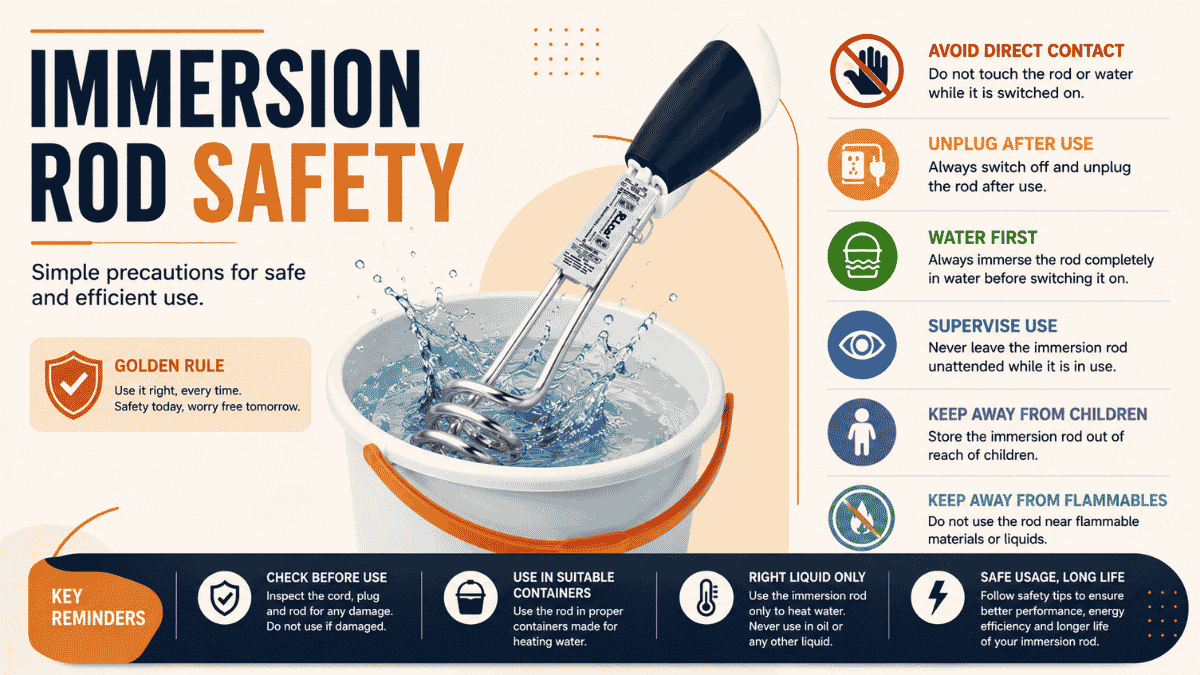
Every winter, immersion rods become one of the most-used appliances in Indian homes. But immersion rod safety often gets overlooked until something goes wrong, like a shock, a melted bucket, or a damaged heating element.
Since this appliance combines electricity and water in the same space, understanding immersion rod safety isn't optional. A few simple precautions can prevent accidents and extend the life of your device significantly.
This guide covers everything you need to know about immersion rod safety, from pre-use checks to post-use care, along with common mistakes and answers to frequent questions.
If you're looking for dependable water heating solutions, Rico brings together a trusted range of home appliances, from shockproof immersion rods and geysers to room heaters, mixer grinders, and other daily essentials. Built with safety-first engineering, energy-efficient performance, and long-lasting durability, Rico's appliances are made to handle the demands of Indian households through every season.
Why Immersion Rod Safety Matters
An immersion rod heats water through direct contact between a live electrical element and standing water. This combination, while convenient, carries real risk if handled carelessly.
Poor immersion rod safety practices can lead to electric shocks, overheating, or even fire hazards in extreme cases. Moreover, neglecting basic precautions shortens the appliance's lifespan considerably.
Understanding a few core principles makes all the difference. Let's break down exactly what proper immersion rod safety looks like, step by step.
Pre-Use Safety Checks
Before you even plug in your rod, a few quick checks can prevent most accidents.
-
Inspect the power cord for cracks, fraying, or exposed wiring.
-
Check the plug for burns, cracks, or looseness.
-
Choose a stable, non-metallic container with enough depth to fully submerge the heating element.
-
Ensure the container sits on a dry, level surface before use.
These checks take less than a minute but form the foundation of good immersion rod safety. Skipping them, even occasionally, increases your risk of an accident.
Choosing the Right Container: Plastic vs Steel
This is one of the most overlooked aspects of immersion rod safety. Not every container is suitable for heating water this way.
Plastic buckets are risky. Immersion rods generate high heat, and ordinary plastic can soften, deform, or even melt near the heating element. This can expose live wiring or cause the bucket to lose shape and leak.
Steel buckets are generally safer. They withstand high temperatures without deforming, making them the more reliable choice. However, steel conducts heat efficiently, so avoid touching the bucket's exterior while the rod is operating.
If you must use plastic, choose a container rated for high-temperature resistance, and never leave it unsupervised.
Safe Operating Practices
Once your rod is set up correctly, a few operational habits keep the entire process safe.
-
Never leave the rod unattended while it's heating water.
-
Keep the water level within the marked minimum and maximum limits.
-
Keep children and pets well away from the heating area.
-
Watch for unusual sounds, smells, or excessive steam during operation.
-
Avoid touching the container or water while the rod is switched on.
Immersion rod safety depends heavily on supervision. Higher-wattage models heat water faster, which also means overheating can happen more quickly if left unattended.
Post-Use Shutdown Protocol
How you switch off your immersion rod matters just as much as how you use it. Follow this simple sequence every time.
-
Switch off the power at the socket first, before touching the rod.
-
Leave the rod submerged in water for about 15 seconds after switching off.
-
Only then, carefully remove the rod from the container.
-
Allow it to cool completely before storing or cleaning.
This short cooling period protects the heating element and is a core part of proper immersion rod safety, since removing a hot rod too quickly can damage both the appliance and its surroundings.
Common Immersion Rod Safety Mistakes to Avoid
Even careful users sometimes fall into these habits. Avoid them to keep your appliance and household safe.
-
Using a damaged cord: Never use a rod with a cracked or frayed cord, even for a single use.
-
Overfilling or underfilling the container: Both extremes affect heating efficiency and increase risk.
-
Leaving the rod on unattended: This remains the leading cause of immersion rod accidents.
-
Ignoring unusual smells or sounds: These are early warning signs that shouldn't be dismissed.
-
Unplugging and immediately removing the rod: Skipping the cooling period increases wear and risk.
Avoiding these mistakes consistently is the simplest way to maintain strong immersion rod safety habits at home.
How Wattage Affects Safety and Heating Time
Different immersion rods heat water at different speeds, depending on their wattage. Understanding this helps you supervise the process appropriately.
-
1000W rods: Take longer to heat water but pose slightly lower risk of rapid overheating.
-
1500W rods: Heat faster and are suited for most everyday household needs.
If you're deciding which wattage suits your household, the Rico Immersion Rod IR1410, a 1000W shockproof model, works well for smaller, single-bucket needs. For faster results, the Rico Immersion Rod IR2514, a 2000W ISI-certified model, heats larger quantities more quickly, though it still requires the same attentive supervision.
This wattage-safety relationship applies across other home appliances too. Our breakdown of the difference between 550W and 750W mixer grinders explains a similar principle: higher wattage means faster performance, but also demands more careful handling.
Why Shockproof Technology Matters
Shockproof design is one of the most important immersion rod safety features to look for while buying. This technology insulates the heating element to prevent stray current from reaching the water or the user.
Models like the Rico Immersion Rod IR1412, a 1500W shockproof rod, are built specifically with this protection in mind, reducing the risk of electric shock even if minor faults occur.
Immersion Rod Lifespan and Safety Over Time
An immersion rod typically lasts between 5 and 10 years, depending on usage frequency, water quality, and maintenance habits. However, ageing appliances can develop safety issues that aren't always obvious.
Watch for these signs that indicate it may be time to replace your rod:
-
Noticeably slower heating than before
-
Visible rust or corrosion on the metal casing
-
Exposed or damaged wiring near the handle
-
Unusual noises or smells during operation
If your rod shows any of these signs, prioritising immersion rod safety means replacing it promptly rather than continuing to use a worn-out device.
Power Backup and Electrical Load Considerations
If you rely on an inverter during power cuts, it's worth understanding how much load your immersion rod draws, since higher-wattage appliances can strain limited backup systems.
Our guide on using a mixer grinder on an inverter covers similar load considerations that apply directly to immersion rods, especially higher-wattage models during winter power outages.
Building a Safer Appliance Routine at Home
Immersion rod safety is easier to maintain when it's part of a broader habit of appliance care across your home. Our comparison of heavyweight vs lightweight iron boxes explores similar safety and handling considerations that apply to other frequently used heating appliances.
If you're building out your household appliance collection more broadly, our roundup of kitchen products covers other everyday essentials worth considering alongside your water heating setup.
Final Thoughts
Good immersion rod safety comes down to a few consistent habits: checking your equipment before use, choosing the right container, supervising the heating process, and following a proper cooldown routine afterwards.
These small steps take only a few extra minutes but significantly reduce your risk of accidents. Ultimately, treating immersion rod safety as a daily habit, not an afterthought, keeps your household protected through every winter.
Frequently Asked Questions
Q1. Is it safe to use an immersion rod in a plastic bucket?
It's not recommended. High heat from the rod can soften or melt ordinary plastic, risking leaks or exposed wiring. A steel or heat-resistant container is a safer choice.
Q2. How long can I safely run an immersion rod?
This depends on water volume and wattage. As a general guide, small quantities take 8 to 12 minutes, while larger volumes may take 20 to 30 minutes. Always monitor the process closely.
Q3. What should I do immediately after switching off my immersion rod?
Leave the rod submerged for about 15 seconds after switching off the power. This brief cooling period protects the heating element before you remove it from the water.
Q4. How can I tell if my immersion rod is no longer safe to use?
Watch for slower heating, visible rust, exposed wiring, or unusual smells and sounds. Any of these signs suggest it's time to replace the rod.
Q5. Does shockproof technology guarantee complete safety?
Shockproof design significantly reduces risk, but it doesn't eliminate the need for basic precautions like supervision, proper containers, and regular inspection of the cord and plug.