
How to Reduce the Noise of a Mixer Grinder: A Practical Guide
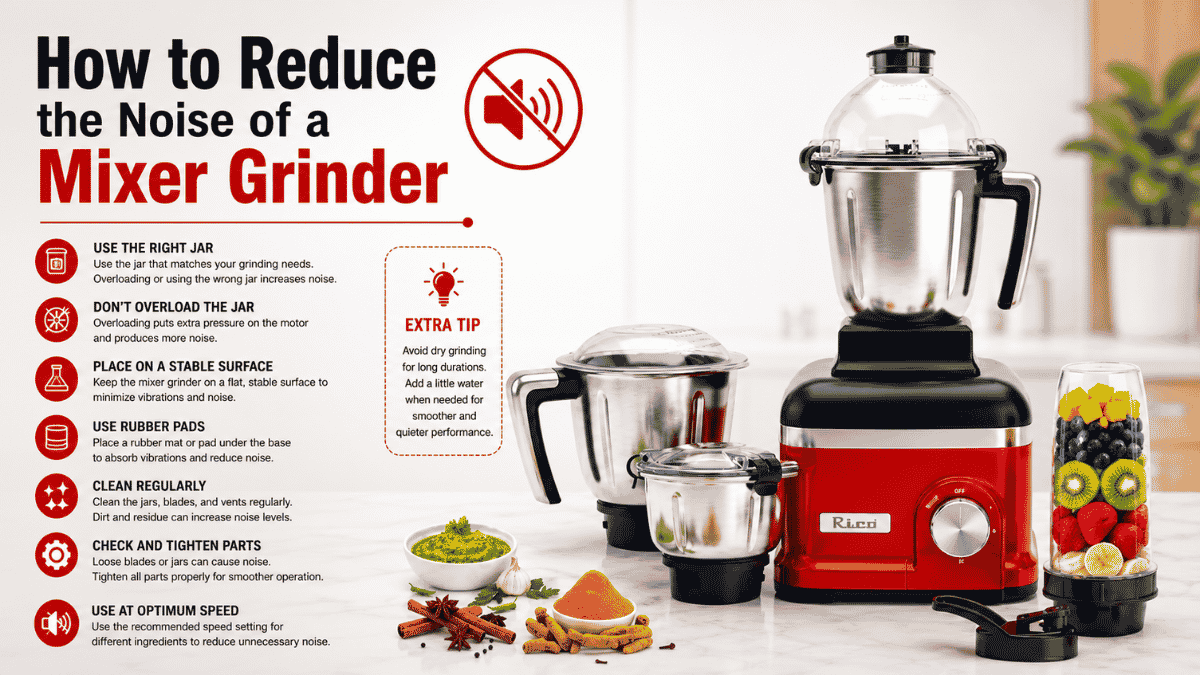
A noisy mixer grinder can disrupt your kitchen routine, wake up sleeping family members, or simply become an everyday annoyance. If your appliance seems louder than it used to be, you're not alone.
This guide explains how to reduce noise of a mixer grinder, covering both quick fixes and long-term solutions to help you enjoy a quieter kitchen.
Why Do Mixer Grinders Make Noise?
Before fixing the problem, it helps to understand its source. Mixer grinders generate noise primarily from motor vibration, blade rotation, and jar placement on the base.
Over time, wear and tear, loose components, or improper usage can amplify this noise significantly. Therefore, identifying the exact cause is the first step toward a quieter operation.
Common Causes of Excessive Noise
Several factors contribute to a noisier-than-normal mixer grinder:
-
Loose or improperly fitted jars on the base
-
Worn-out or damaged blades causing imbalance
-
Overloading the jar beyond recommended capacity
-
Placing the appliance on an uneven or hollow surface
-
Lack of regular maintenance and cleaning
-
Motor bearing wear due to prolonged heavy use
Identifying which of these applies to your machine helps you choose the right solution.
Step 1: Check the Jar Placement
An improperly seated jar is one of the most common noise culprits. Ensure the jar locks securely onto the base before switching on the machine.
A loose jar can vibrate against the motor base, creating rattling sounds during operation. Therefore, always double-check alignment before each use.
Step 2: Avoid Overloading the Jar
Overfilling the jar forces the motor to work harder, which often increases both noise and heat. Stick to the manufacturer's recommended fill line for smoother, quieter operation.
Moreover, overloading can strain the blades and motor over time, potentially leading to more serious performance issues down the line.
Step 3: Use a Stable, Flat Surface
Placing your mixer grinder on an uneven or hollow surface can amplify vibrations significantly. Instead, use a flat, solid countertop for operation.
In addition, placing a rubber mat or silicone base under the appliance can further absorb vibrations, reducing overall noise levels.
Step 4: Inspect and Replace Worn Blades
Blades that have become dull, chipped, or misaligned often cause uneven rotation, resulting in louder operation. Regularly inspect blades for visible damage.
If you notice unusual vibration or grinding sounds, replacing worn blades can restore smoother, quieter performance almost immediately.
Step 5: Lubricate Moving Parts When Needed
Some mixer grinders have components that benefit from occasional lubrication, particularly around the base coupling. However, always refer to your manufacturer's guidelines before applying any lubricant.
Improper lubrication can sometimes cause more harm than good, so this step should be done carefully and only when recommended.
Step 6: Clean the Appliance Regularly
Built-up residue around the blade coupling or jar base can interfere with smooth rotation, increasing noise over time. Regular cleaning helps maintain optimal performance.
Additionally, food particles trapped in hard-to-reach areas can cause subtle imbalances that contribute to louder operation.
Step 7: Check Motor Bearings
If noise persists despite trying the above steps, worn motor bearings could be the underlying issue. This typically happens after years of heavy use.
In such cases, professional servicing may be necessary, since bearing replacement usually requires technical expertise rather than a DIY fix.
Choosing a Quieter Mixer Grinder from the Start
If your current appliance is beyond simple fixes, consider these features when purchasing a new one:
-
Noise-reduction technology - some models are specifically engineered for quieter operation
-
Balanced blade design - reduces vibration during high-speed grinding
-
Sturdy motor base - minimizes rattling and movement during use
-
Rubber grip feet - helps absorb vibration from the countertop
Investing in a well-designed appliance from the start can prevent many common noise issues altogether.
Quick Fixes vs Long-Term Solutions
Here's a simple breakdown of noise-reduction methods based on effort and effectiveness:
|
Solution |
Effort Required |
Effectiveness |
|
Checking jar placement |
Minimal |
Immediate improvement |
|
Avoiding overloading |
Minimal |
Noticeable reduction |
|
Using a stable surface or mat |
Low |
Moderate improvement |
|
Replacing worn blades |
Moderate |
Significant improvement |
|
Professional bearing service |
High |
Long-term fix |
|
Upgrading to a quieter model |
High |
Best long-term solution |
This table helps you prioritize which steps to try first before considering a full appliance upgrade.

Consistent care prevents many noise problems from developing in the first place:
-
Clean jars and blades after every use
-
Avoid running the motor continuously for extended periods
-
Store the appliance in a dry, stable location
-
Periodically check for loose screws or fittings
These simple habits go a long way in maintaining quiet, efficient operation over the appliance's lifespan.
How Appliance Design Affects Noise Across the Kitchen
Noise reduction isn't unique to mixer grinders alone. Motor-based kitchen appliances often share similar vibration and balance challenges. For instance, our comparison of wet grinder vs mixer grinder touches on how different grinding mechanisms affect both performance and operating sound levels.
Similarly, understanding proper technique matters for quieter, more efficient use overall. Our guide on how to use a juicer mixer grinder covers foundational usage habits that also help minimize unnecessary strain and noise during operation.
Complementary Kitchen Tools Worth Considering
If you're also evaluating other kitchen appliances alongside your mixer grinder, our comparison of centrifugal vs slow juicer offers insights into balancing performance with quieter, gentler operation.
Building a Well-Equipped, Efficient Kitchen
For a broader view of appliances that work well together in a modern kitchen, our guide to essential kitchen products is a useful starting point.
Convenience Extends Beyond the Kitchen
Just as a portable fan is valued for quiet, efficient operation around the home, a well-maintained mixer grinder should offer similarly smooth, low-noise performance during daily use.
Explore Rico's Mixer Grinder Range
If you're considering an upgrade to a quieter, more reliable mixer grinder, explore Rico's full appliance range at www.rico.in.
Conclusion
Reducing the noise of a mixer grinder often starts with simple checks - securing the jar properly, avoiding overloading, and using a stable surface. If noise persists, inspecting blades and motor bearings can help identify deeper issues.
Regular maintenance and mindful usage go a long way in keeping your appliance quiet and efficient over time. Ultimately, whether through simple fixes or upgrading to a better-designed model, a quieter mixer grinder makes everyday cooking a more pleasant experience.
FAQs
1. Why is my mixer grinder suddenly louder than before?
This is often caused by a loose jar, worn blades, overloading, or motor bearing wear developing over time.
2. Can placing a mat under the mixer grinder reduce noise?
Yes, a rubber or silicone mat helps absorb vibrations, noticeably reducing noise during operation.
3. Does overloading the jar really increase noise?
Yes, overloading forces the motor to work harder, which often increases both noise and heat during operation.
4. Should I replace blades if my mixer grinder is noisy?
If blades are worn, chipped, or misaligned, replacing them often significantly reduces vibration and noise.
5. When should I consider professional servicing for a noisy mixer grinder?
If basic fixes don't help, worn motor bearings may be the cause, which typically requires professional servicing.