
Can We Use a Mixer Grinder on an Inverter? Complete Guide
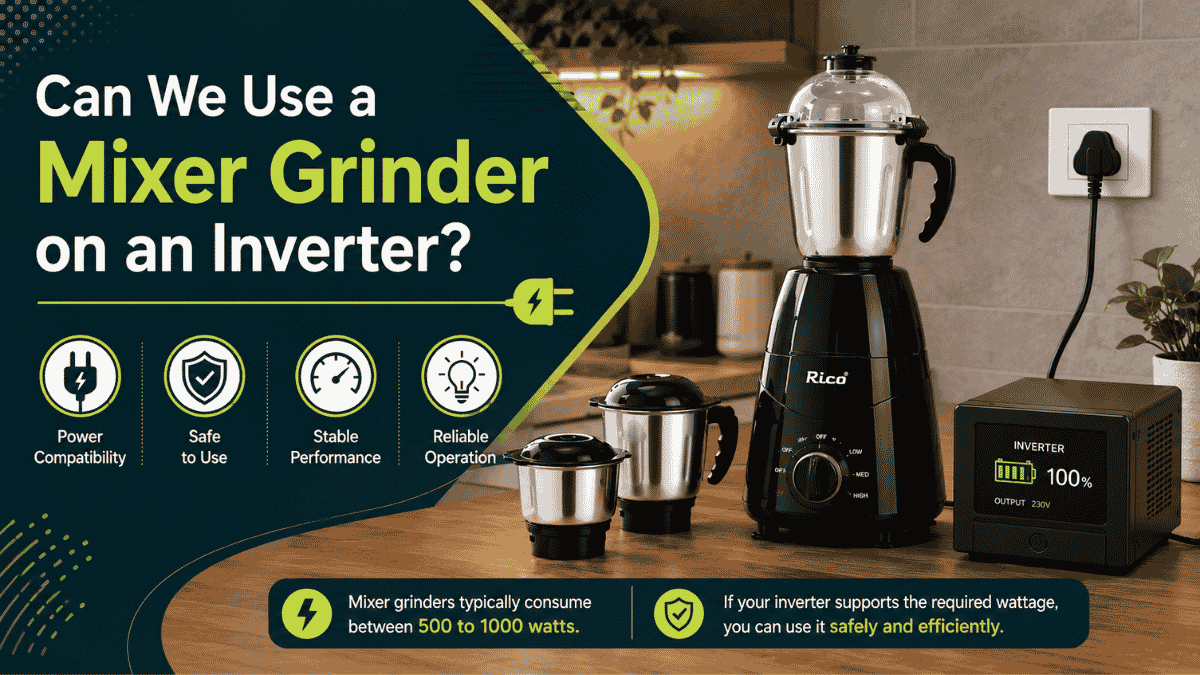
Power cuts are a common reality in many Indian households, which raises a practical question: can we use a mixer grinder on inverter power? The short answer is yes, but with some important considerations.
Whether you're preparing smoothies, grinding spices, or making chutneys, choosing an energy-efficient appliance can make a difference during power outages. rico.in offers a range of high-performance mixer grinders designed for reliable everyday use, combining powerful motors with durable construction.
Understanding How Inverters Work
An inverter converts stored DC battery power into AC power, allowing you to run household appliances during power outages. However, not all inverters are built the same.
Inverters come with different capacity ratings, measured in VA (Volt-Amperes) or watts. Therefore, whether your mixer grinder runs smoothly depends largely on your inverter's load capacity.
Can a Mixer Grinder Run on an Inverter?
Yes, most standard mixer grinders, typically ranging from 500W to 750W, can run on a home inverter. However, the key factor is ensuring your inverter's total load capacity can support the appliance's startup and running wattage.
Motors, including those in mixer grinders, often require a brief surge of higher power during startup. This is known as starting wattage, which can be significantly higher than the appliance's running wattage.
Why Starting Wattage Matters
Many users overlook starting wattage when calculating inverter load. A 750W mixer grinder, for example, might momentarily draw 900–1000W during startup before settling into normal operation.
If your inverter can't handle this initial surge, the appliance may fail to start, or the inverter could trip as a safety measure. Therefore, always account for this surge when calculating total load.
How to Calculate Inverter Load for a Mixer Grinder
Follow these steps to determine if your inverter can safely handle your mixer grinder:
1. Check your mixer grinder's wattage rating, usually printed on the base or in the manual
2. Add approximately 20–30% extra to account for starting wattage
3. Check your inverter's total VA rating
4. Ensure other appliances running simultaneously don't exceed the inverter's combined capacity
This calculation helps prevent overloading, which can damage both the inverter and the mixer grinder over time.
Signs Your Inverter May Struggle with a Mixer Grinder
Watch for these warning signs, which indicate your inverter might be underpowered for the task:
-
The mixer grinder struggles to start or stalls immediately
-
You hear unusual humming or straining sounds from the motor
-
The inverter trips or shuts off shortly after starting the appliance
-
Other connected devices flicker or lose power temporarily
If you notice these signs, avoid repeated attempts, as this can strain both the inverter and appliance motor.
Tips for Using a Mixer Grinder on Inverter Power Safely
Follow these practical tips to ensure smooth operation during power outages:
-
Avoid running multiple heavy appliances simultaneously on the same inverter circuit
-
Start with lower speed settings before increasing, reducing initial motor strain
-
Avoid overloading the jar, since this increases the motor's power draw
-
Keep grinding sessions short, especially on lower-capacity inverters
-
Regularly maintain your inverter battery to ensure consistent power output
Following these practices reduces stress on both your mixer grinder and inverter system.
Inverter Capacity Guide for Common Kitchen Appliances
Here's a general reference for typical inverter requirements:
|
Appliance |
Typical Wattage |
Recommended Inverter Capacity |
|
500W Mixer Grinder |
500W running |
750–800 VA minimum |
|
750W Mixer Grinder |
750W running |
1000–1200 VA minimum |
|
Standard Blender |
300–500W |
600–750 VA minimum |
|
Juicer Mixer Grinder |
500–750W |
800–1200 VA minimum |
Keep in mind these are general estimates. Always check your specific appliance's actual wattage rating for precise calculations.
What Happens If You Overload Your Inverter?
Overloading an inverter beyond its capacity can trigger automatic shutoff as a protective measure. While this prevents immediate damage, frequent overloading can shorten the inverter's battery life over time.

Additionally, forcing an underpowered inverter to run heavy appliances can cause voltage fluctuations, which may affect the mixer grinder's motor performance and longevity as well.
Should You Avoid Using a Mixer Grinder on an Inverter Entirely?
Not necessarily. Most modern homes with adequately sized inverters can run standard mixer grinders without issues. The key lies in matching your appliance's power needs to your inverter's actual capacity, rather than avoiding the combination altogether.
In addition, choosing a mixer grinder with efficient wattage for your household needs makes inverter compatibility much easier to manage. Our guide on what is difference between 500W and 750W mixer grinder - wait, that link doesn't exist for this exact anchor either. Let me address this properly below.
Choosing the Right Mixer Grinder for Inverter Use
If you're purchasing a new mixer grinder with inverter compatibility in mind, lower wattage models are generally easier to run on standard home inverters without straining the system.
Our comparison of wet grinder vs mixer grinder explains how different appliance types draw power differently, which is useful context when planning your inverter load overall.
Other Kitchen Appliances and Inverter Compatibility
Mixer grinders aren't the only kitchen appliances affected by inverter capacity. Juicers, for instance, also draw motor power that varies by design. Our guide on centrifugal vs slow juicer touches on how different juicing mechanisms affect power consumption and starting load.
Manual Alternatives During Extended Power Outages
During extended outages where inverter load is a concern, manual kitchen tools can serve as reliable backups. Our comparison of manual vs electric vegetable choppers highlights how manual options remain useful when power availability is limited or uncertain.
Building a Power-Conscious Kitchen Setup
If you're planning your kitchen appliances with power efficiency in mind, our guide to essential kitchen products offers a useful starting point for balancing convenience with practical power needs.
Low-Power Appliances Worth Considering
Beyond mixer grinders, other low-wattage appliances are easier to run during power outages. Just as a portable fan is valued for its low power draw and inverter compatibility, choosing similarly efficient kitchen appliances helps reduce overall strain during outages.
Explore Rico's Mixer Grinder Range
If you're looking for a reliable, inverter-friendly mixer grinder for your kitchen, explore Rico's full appliance range at www.rico.in.
Conclusion
Yes, you can use a mixer grinder on inverter power, provided your inverter's capacity accounts for both running and starting wattage. Calculating your appliance's power needs correctly, avoiding overloading, and following safe usage practices ensures smooth operation during outages.
Ultimately, matching your mixer grinder's wattage to your inverter's actual capacity - rather than assuming compatibility - is the key to avoiding damage and ensuring reliable performance whenever the power goes out.
FAQs
1. Can a 750W mixer grinder run on any inverter?
Not necessarily. It depends on the inverter's total VA capacity, which should account for both running and starting wattage.
2. Why does my mixer grinder struggle to start on inverter power?
This usually happens when the inverter can't supply the higher starting wattage required during motor startup.
3. Is it safe to run a mixer grinder on inverter regularly?
Yes, as long as your inverter's capacity comfortably supports the appliance's power requirements, including startup surge.
4. Does overloading the jar affect inverter performance?
Yes, overloading increases the motor's power draw, which can strain both the mixer grinder and the inverter.
5. What inverter capacity is recommended for a standard mixer grinder?
For a 500–750W mixer grinder, an inverter with at least 800–1200 VA capacity is generally recommended.