
Heavy Weight vs Light Weight Iron Box: How to Pick the Right One
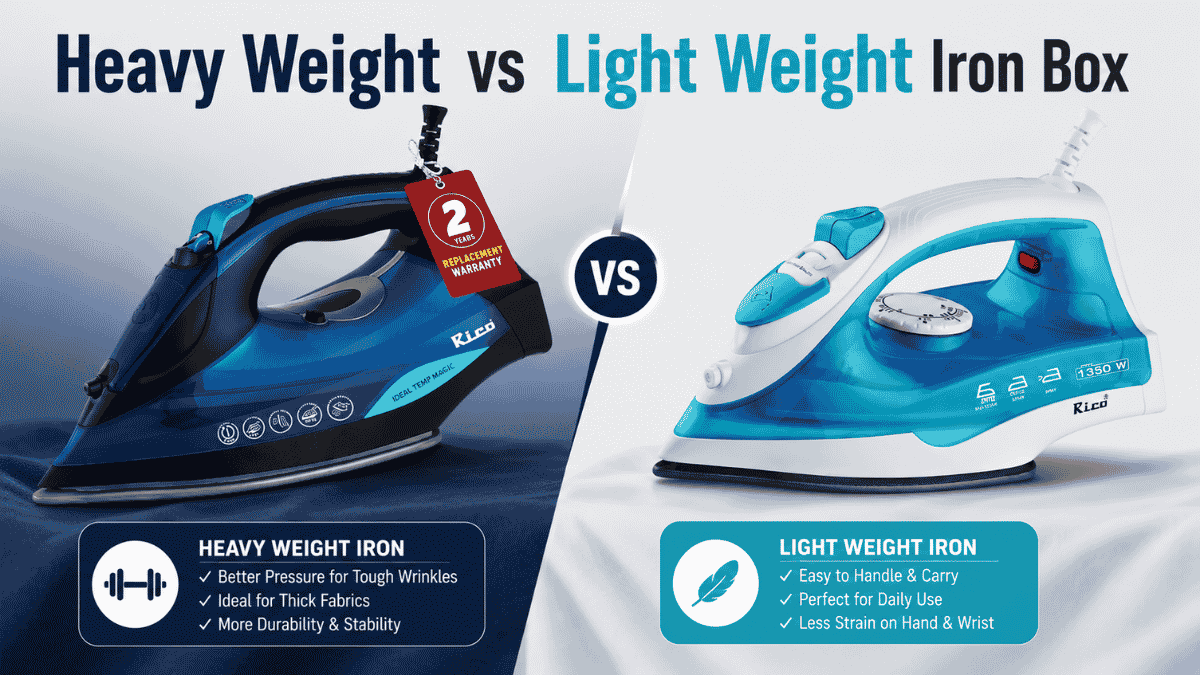
Buying an iron box seems simple until you're standing in front of two models - one solid and heavy, the other sleek and light. Which one actually irons better?
The heavy-weight vs light-weight iron box debate isn't about which product is superior. It's about which one matches your fabric habits, ironing frequency, and comfort level. This guide breaks it down clearly so you can decide with confidence.
Understanding the Basic Difference
A heavy-weight iron box generally weighs more than 1.2 kg and is often built with a cast iron or thick aluminium soleplate. This extra mass helps the iron push down naturally, flattening creases with less manual effort.
A lightweight iron box, in contrast, weighs under 1.2 kg. It relies on a slimmer soleplate and compact internals, making it easier to lift, angle, and move quickly across fabric.
Neither design is flawed. However, each performs differently depending on what you're ironing and how long you do it.
How Weight Affects Ironing Performance
Weight directly influences how much pressure is applied to the fabric. A heavier iron applies a consistent downward force, so it smooths thick materials in fewer passes. Therefore, cotton bedsheets, curtains, and denim respond well to heavier irons.
Lighter irons, meanwhile, depend more on heat and steam than on physical weight. This makes them gentler on delicate fabrics like silk, chiffon, or synthetic blends, where too much pressure can cause damage.
In addition, lighter irons allow better control around tricky areas - collars, cuffs, and pleats - since they're easier to angle precisely.
Comparing Heavy and Light Iron Boxes at a Glance
|
Feature |
Heavy Weight Iron Box |
Light Weight Iron Box |
|
Typical Weight |
Below 1.2 kg |
|
|
Watt |
2200W |
1350W |
|
Ironing Effort |
Lower strokes, more pressure |
More strokes, less pressure |
|
Best Suited Fabric |
Denim, linen, thick cotton |
Silk, synthetic, daily wear |
|
Arm Fatigue |
Higher with long use |
Minimal, even with frequent use |
|
Portability |
Bulkier, less travel-friendly |
Compact and easy to carry |
|
Durability |
Often longer-lasting build |
Depends on build quality |
|
Steam Output Needed |
Lower, since weight adds pressure |
Higher, to compensate for less pressure |
|
Ideal Ironing Frequency |
Weekly or occasional use |
Daily or frequent use |
|
Price Range |
Slightly higher on average |
Generally more affordable |
|
Storage Convenience |
Needs more shelf/cupboard space |
Easy to store in tight spaces |
|
Heat Retention |
Holds heat longer between strokes |
Cools slightly faster, may need reheating |
|
Ease of Handling for Beginners |
Requires some practice with control |
Easier to learn and manoeuvre |
|
Suitability for Elderly/Children |
Less suitable due to weight |
More suitable and safer to use |
This comparison shows that the "better" choice really depends on your household's ironing patterns, not a fixed standard.
Who Should Choose a Heavy-Weight Iron Box?
A heavy-weight iron box works best if:
-
You iron thick fabrics like jeans, jackets, or heavy curtains regularly
-
You prefer fewer strokes to get a crisp finish
-
You don't iron daily, so occasional arm strain isn't a concern
-
You want a durable, long-lasting soleplate build
Moreover, heavy irons are often favoured in households that batch-iron clothes weekly rather than daily. The added pressure saves time per garment.
Who Should Choose a light-weight Iron Box?
On the other hand, a light-weight iron box suits you if:

-
You iron clothes daily or multiple times a week
-
You handle delicate fabrics frequently
-
You want less strain on wrists and shoulders
-
You travel often and need a compact, easy-to-pack iron
For people managing busy mornings or handling office wear daily, the reduced fatigue from a light iron makes a noticeable difference over time.
Steam, Soleplate, and Other Features That Matter
Weight is important, but it's not the only factor. Before buying, also check:
-
Steam output - Higher steam compensates for lower pressure in light irons
-
Soleplate material - Ceramic or non-stick coatings glide smoother
-
Temperature settings - Adjustable heat prevents fabric scorching
-
Auto shut-off - A safety essential for accident-prone households
-
Cord flexibility - Longer, swivel cords make ironing easier
Interestingly, the same "power versus convenience" trade-off appears in other kitchen appliances as well. Our guide on wet grinder vs mixer grinder explains how motor strength and weight affect daily usability, much like iron boxes.
The Balance and Handling Factor
Handling comfort matters as much as raw performance. Just as a portable fan is valued for being light-weight and easy to move around the house, a light iron box offers similar convenience - quick to lift, angle, and set aside between tasks.
Heavy irons, however, offer stability once in motion, much like how heavier kitchen tools often deliver stronger, more consistent results despite requiring more effort to operate.
Common Mistakes People Make While Choosing an Iron Box
Avoid these buying mistakes to get better long-term value:
-
Choosing based on price alone, ignoring soleplate quality
-
Ignoring steam settings while focusing only on weight
-
Buying a heavy iron for daily use without checking wrist comfort
-
Overlooking auto shut-off, especially in homes with children
These small oversights often lead to buyer's regret within a few months of use.
How This Applies Beyond Ironing
The heavy-versus-light trade-off isn't unique to irons. It's a recurring theme across home appliances, where power and convenience are often balanced against each other.
For instance, our comparison of manual vs. electric vegetable choppers highlights a similar decision: manual effort versus ease of use. Likewise, our centrifugal vs slow juicer guide shows how output quality can depend on speed versus gentleness, just as ironing depends on pressure versus control.
If you're setting up your kitchen or home with the right appliances overall, our broader guide to essential kitchen products is a useful starting point too.
Maintenance Tips for Longer Iron Life
Regardless of weight, proper care keeps any iron box performing well:
-
Clean the soleplate regularly to avoid fabric residue buildup
-
Use distilled water to prevent mineral scaling inside steam irons
-
Store the iron upright after use to avoid leakage
-
Avoid direct contact with zippers or metal buttons while ironing
Conclusion
Choosing between a heavy-weight and light-weight iron box comes down to three things: the fabrics you iron most, how often you iron, and your physical comfort. Heavy-weight irons (typically 1.5-2.5 kg) provide strong, consistent pressure, making them ideal for thick fabrics and occasional ironing. Light-weight irons (typically 0.8-1.4 kg) are easier to handle, offer better control, and reduce hand fatigue during daily use.
Beyond weight, factors like steam output, soleplate quality, and safety features also influence your choice. Ultimately, the right iron box isn't the "best" one on paper-it's the one that fits seamlessly into your daily routine.
FAQs
1. Which is better - heavy-weight or light-weight iron box?
Neither is universally better. Heavy irons suit thick fabrics and occasional use, while light irons suit daily ironing and delicate fabrics.
2. Does a heavy iron box iron clothes faster?
Yes, often. Its weight applies more pressure, reducing the number of strokes needed per garment.
3. Is a light-weight iron box less durable?
Not necessarily. Durability depends more on build quality and soleplate material than weight alone.
4. Which iron box is safer for daily household use?
light-weight iron boxes are generally safer for frequent use since they cause less strain and are easier to control.
5. What is the ideal weight for a home iron box?
Most users find 1 kg to 1.5 kg comfortable, offering a balance between pressing power and ease of handling.