
Slow Juicer vs Blender: Which One Should You Choose?
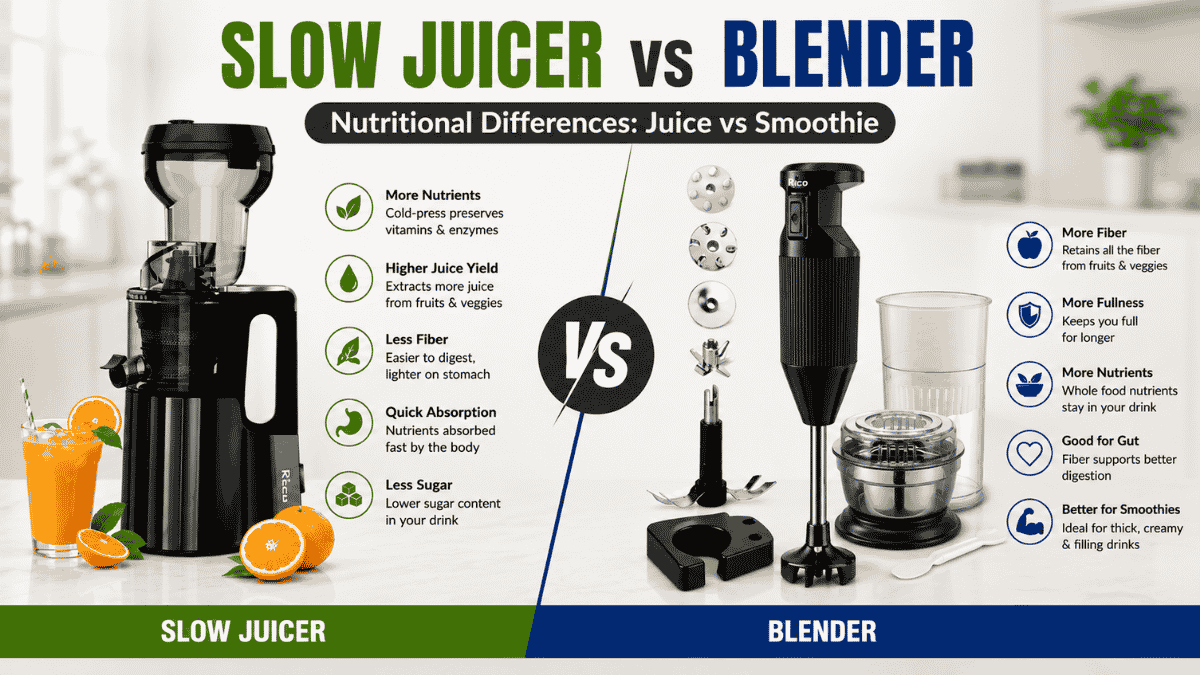
Walk into any kitchen appliance store, and you'll likely face this question: slow juicer or blender? Both promise healthier eating, but they serve very different purposes.
Understanding the slow juicer vs blender debate helps you choose the right tool for your nutrition goals, rather than buying based on trends alone. Let's break down how each one works.
If you're planning to upgrade your kitchen, rico.in offers a range of reliable kitchen appliances designed to make healthy food preparation easier. Whether you prefer fresh juices or nutrient-rich smoothies, Rico's thoughtfully designed appliances deliver convenience, performance, and everyday durability.
How a Slow Juicer Works
A slow juicer, also called a masticating juicer, extracts liquid from fruits and vegetables using a slow-turning auger. This auger crushes and presses produce gently, separating juice from pulp and fibre.
Since it operates at low speed, typically 40–100 RPM, a slow juicer generates minimal heat and oxidation. Therefore, the resulting juice retains more nutrients and stays fresh longer compared to fast extraction methods.
How a Blender Works
A blender, in contrast, uses fast-spinning blades to break down entire fruits and vegetables into a smooth mixture. Unlike juicing, blending retains all the fibre, pulp, and skin within the final product.
This means blended drinks, like smoothies, are thicker and more filling than juice. Moreover, blenders work at much higher speeds, often exceeding 15,000 RPM, making them faster for quick, one-step preparations.
Slow Juicer vs Blender: Key Differences
Here's a clear comparison to simplify your decision:
|
Factor |
Slow Juicer |
Blender |
|
Extraction Method |
Slow crushing and pressing |
Fast blade blending |
|
Fiber Content |
Removed, pulp separated |
Fully retained |
|
Texture |
Thin, liquid juice |
Thick, smoothie-like |
|
Nutrient Retention |
Higher due to low heat |
Slightly lower, more oxidation |
|
Speed of Use |
Slower processing |
Faster, one-step blending |
|
Best For |
Pure juice, detoxing |
Smoothies, shakes, purees |
|
Cleanup |
More parts to clean |
Generally easier to clean |
This table shows that neither appliance is "better" overall - they simply serve different nutritional and lifestyle purposes.
Nutritional Differences: Juice vs Smoothie
One of the biggest differences lies in fibre content. Juicing removes fibre, leaving behind a concentrated liquid rich in vitamins and antioxidants, but lacking the digestive benefits of fibre.

Blending, on the other hand, keeps all the fibre intact. Consequently, smoothies digest more slowly, helping you feel fuller for longer and supporting better blood sugar control.
Therefore, if your goal is quick nutrient absorption, a slow juicer suits you better. However, if you want a filling, fibre-rich meal replacement, blending is the smarter choice.
Which One Should You Choose Based on Your Goals?
Your decision should align with your specific health and lifestyle goals:
Choose a slow juicer if you:
-
Want concentrated nutrients without bulk
-
Are following a juice cleanse or detox plan
-
Prefer a light, easily digestible drink
-
Don't mind slightly longer preparation time
Choose a blender if you:
-
Want a filling meal replacement or snack
-
Prefer retaining fibre for digestive health
-
Need quick, one-step food preparation
-
Plan to blend thicker ingredients like nuts or oats
Taste and Texture Comparison
Juice from a slow juicer tends to be smooth, light, and easy to drink quickly. Since fibre is removed, the texture feels closer to water than a traditional smoothie.
Blended drinks, meanwhile, have a thicker, creamier consistency due to retained pulp and fibre. Some people find this texture more satisfying, especially when using ingredients like bananas or yogurt.
Cleaning and Maintenance Differences
Slow juicers typically have more components, including an auger, mesh filter, and juicing chamber, all of which require thorough cleaning after each use.
Blenders, by comparison, often have fewer parts, making cleanup quicker and more straightforward. In addition, many blender jars are dishwasher-safe, adding further convenience.
Speed and Convenience in Daily Use
If you're short on time, blenders generally offer faster preparation since there's no separate pulp-removal step. You simply add ingredients and blend.
Slow juicers, however, require more setup and slower processing due to their gentle extraction method. Despite this, many users find the nutrient benefits worth the extra time invested.
Can You Use Both Appliances Together?
Many health-conscious households keep both a slow juicer and a blender, using each for different purposes throughout the week. You might juice fresh produce for a morning detox, then blend a protein smoothie later for a filling snack.
This combined approach offers maximum flexibility, letting you choose the right method based on your nutritional needs each day rather than committing to just one appliance.
How This Compares to Other Kitchen Appliance Decisions
This trade-off between concentrated nutrients and filling texture isn't unique to juicers and blenders. Similar decisions appear across kitchen appliances.
For instance, our comparison of centrifugal vs slow juicer explores a related decision within juicing itself, weighing speed against nutrient retention. Likewise, our guide on wet grinder vs mixer grinder shows how different grinding technologies suit different textures and cooking needs.
Matching Kitchen Tools to Your Prep Style
Choosing between a juicer and blender often comes down to how much control and convenience you want during food prep. Our breakdown of manual vs electric vegetable choppers follows a similar principle, balancing hands-on control against speed and ease of use.
Building a Complete Healthy Kitchen Setup
If you're planning your kitchen around healthier eating habits, our guide to essential kitchen products offers a useful starting point for choosing appliances that work well together.
Portability Matters Too
Beyond performance, everyday convenience plays a role in how often you'll actually use an appliance. Just as a portable fan is valued for being lightweight and easy to move, a compact juicer or blender that's easy to store encourages more consistent daily use.
Maintenance Tips for Longer Appliance Life
Regardless of which appliance you choose, these habits help extend its lifespan:
-
Clean all removable parts immediately after use
-
Avoid overloading the juicer chute or blender jar
-
Use filtered water when rinsing to prevent mineral buildup
-
Store components dry to prevent mould or odour buildup
Conclusion
The slow juicer vs blender debate ultimately comes down to your nutritional goals and lifestyle preferences. A slow juicer delivers concentrated, easily absorbed nutrients ideal for detoxing, while a blender retains fibre, offering a thicker, more filling option for meal replacement.
Rather than choosing one exclusively, many households benefit from owning both appliances for different purposes throughout the week. Understanding these core differences ensures you pick the right tool for your specific health and convenience needs, every time.
FAQs
1. Is a slow juicer healthier than a blender?
Not necessarily healthier - a slow juicer offers concentrated nutrients without fibre, while a blender retains fibre for better digestion and fullness.
2. Can I use a blender instead of a juicer?
Yes, but the result will be thicker and pulpier, unlike the smooth, thin juice produced by a dedicated slow juicer.
3. Which is better for weight loss - juicing or blending?
Blending often supports weight loss more effectively, since retained fibre helps you feel fuller for longer than juice alone.
4. Is a slow juicer harder to clean than a blender?
Generally, yes. Slow juicers have more parts, such as the auger and mesh filter, which require more thorough cleaning after each use.
5. Should I buy both a slow juicer and a blender?
If your diet includes both juice cleanses and smoothies, owning both appliances offers the most flexibility for different nutritional needs.