
Three-Blade Ceiling Fan: Why It Remains the Most Popular Choice
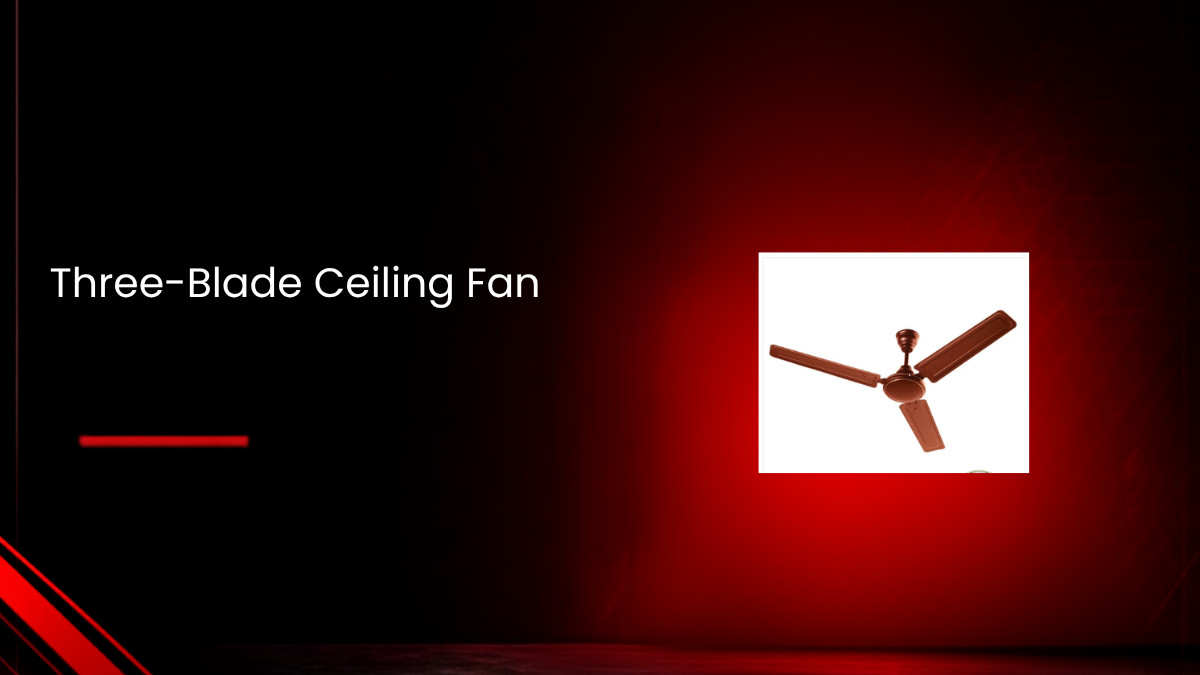
Walk into almost any Indian home, and you'll find the same setup overhead: a three-blade ceiling fan. This design has remained the industry standard for decades, and there are genuine performance reasons behind that popularity.
A three-blade ceiling fan strikes a practical balance between strong airflow, energy efficiency, and affordability. While four-blade and decorative alternatives exist, the three-blade design continues to dominate Indian households for good reason.
This guide explains exactly why a three-blade ceiling fan performs the way it does, how it compares to alternatives, and how to choose the right one for your home. If you're ready to compare real options, Rico's range of ceiling fans is worth a look.
What Is a Three-Blade Ceiling Fan?
A three-blade ceiling fan is the standard fan configuration found in most Indian homes, featuring three evenly spaced blades attached to a central motor. This design has become the default largely because it delivers the best balance of airflow and efficiency for typical room sizes.
Why the Three-Blade Design Became the Standard
Understanding why a three-blade ceiling fan dominates the market comes down to a few core engineering advantages.
-
Lower resistance: Fewer blades mean less air resistance, allowing faster rotation for the same motor output.
-
Stronger airflow: This reduced resistance translates directly into more air moved per minute compared to four-blade designs.
-
Lower manufacturing cost: Fewer blades mean less material and simpler construction, keeping prices more accessible.
-
Lighter overall weight: A three-blade ceiling fan puts less strain on the mounting and ceiling structure.
These combined advantages explain why manufacturers continue producing three-blade ceiling fan models as their primary offering, even as alternative designs have entered the market.
Performance Benefits of a Three-Blade Ceiling Fan

Stronger Airflow
This is the standout advantage. A three-blade ceiling fan generally moves more air than a comparable four-blade model, since the reduced blade count allows the motor to achieve higher rotational speed more efficiently.
For larger rooms or halls where strong, direct cooling matters most, this airflow advantage makes a genuine difference in comfort.
Better Energy Efficiency
Since a three-blade ceiling fan encounters less resistance, the motor typically doesn't need to work as hard to achieve strong airflow. This can translate into marginally better energy efficiency compared to heavier, higher-resistance designs.
If you're evaluating power consumption more broadly across your home appliances, our breakdown of the difference between 550W and 750W mixer grinders explains a similar efficiency principle: lower resistance and well-matched power delivery often mean better real-world performance.
Affordability
With simpler construction and fewer materials required, a three-blade ceiling fan is generally more budget-friendly than four-blade or heavily decorative alternatives. This affordability is a major reason it remains the default choice for most households.
Lighter Installation Load
The reduced blade weight makes installation slightly simpler and puts less ongoing stress on the ceiling mount and ball bearings, which can contribute to smoother long-term performance.
Is a Three-Blade Ceiling Fan Right for Your Home?
A three-blade ceiling fan makes sense in most common household situations. Consider this option if:
-
You need strong, direct airflow for a large living room or hall
-
You live in a hot, humid climate where powerful cooling matters most
-
Energy efficiency and lower running costs are a priority
-
You prefer a sleek, minimalist design aesthetic
-
Budget plays a significant role in your decision
When You Might Consider an Alternative
While a three-blade ceiling fan suits most households, it isn't automatically the right choice for every room. You might lean toward a different option if:
-
Quiet operation matters more than maximum airflow, particularly in bedrooms
-
You prefer a more traditional, decorative aesthetic
-
Your room is relatively small, where gentler, evenly distributed airflow works just as well
How Room Size Affects Your Choice
Matching a three-blade ceiling fan to your room's dimensions ensures you get the full benefit of its stronger airflow. Larger blade spans paired with this design cover more area effectively, making it particularly well-suited to living rooms, halls, and larger bedrooms.
For smaller spaces like bathrooms or compact utility rooms, a smaller blade span matters more than blade count, since even a three-blade ceiling fan with a wide sweep can feel overpowering in a confined area.
Choosing a Reliable Three-Blade Ceiling Fan
Motor quality and build reliability matter just as much as blade count when choosing a fan. Rico's Oric CF2305, a 1200mm BEE 1-Star ceiling fan, reflects the standard three-blade design most Indian households rely on, featuring a CCA winding motor built to perform reliably even at low voltage, paired with pre-greased double ball bearings for smoother, longer-lasting operation.
Similarly, the Oric CF2307, a 1200mm BEE 1-Star ceiling fan, offers the same reliable motor and bearing technology in a decorative Aluminum and CRCA body, combining the airflow strength of a standard three-blade design with a more finished aesthetic, backed by a 2-year replacement warranty.
Maintenance Tips for a Three-Blade Ceiling Fan
Keeping your fan performing at its best requires some basic, regular upkeep.
-
Clean all three blades periodically to prevent dust buildup, which can reduce airflow efficiency over time.
-
Check mounting screws and brackets occasionally, since consistent high-speed rotation can gradually loosen fittings.
-
Listen for unusual noise or wobble, which may indicate an imbalance needing correction.
-
Avoid harsh chemical cleaners directly on the blades, opting instead for a soft, slightly damp cloth.
Getting the Rod Size and Rotation Right
Choosing the right three-blade ceiling fan is only part of the equation. Installation details matter just as much for actual performance.

Getting the downrod length correct ensures your fan achieves proper clearance and optimal airflow for your ceiling height. Additionally, adjusting your fan's rotation direction seasonally, anticlockwise in summer and clockwise in winter, helps you get consistent comfort year-round from the same appliance.
Building a Well-Rounded Cooling Setup
Choosing a three-blade ceiling fan is just one part of setting up effective home cooling. If you also want compact, personal cooling options for smaller spaces or targeted airflow, our guide on portable fans covers alternatives that work well alongside your ceiling fan choice.
For a broader look at equipping your home with reliable everyday appliances, our roundup of kitchen products covers other essentials worth considering as you plan your space.
Common Misconceptions About Blade Count
A few misunderstandings often influence buying decisions when it comes to fan blade count.
-
"More blades always mean better cooling." In reality, a three-blade ceiling fan often delivers stronger direct airflow than four-blade alternatives.
-
"Blade count is the most important spec to check." Motor quality, blade pitch, and blade span typically influence performance more than blade count alone.
-
"A three-blade fan is always noisier." While it can run slightly louder at high speed, a well-engineered motor significantly narrows this gap.
Final Thoughts
A three-blade ceiling fan remains the industry standard for good reason. Its lower resistance design delivers stronger airflow, better energy efficiency, and a more affordable price point compared to alternatives with additional blades.
For most Indian households, particularly in larger rooms or hotter climates, a three-blade ceiling fan offers the most practical, effective cooling solution. Understanding these performance fundamentals helps you make a genuinely informed choice, rather than picking based on appearance alone.
Frequently Asked Questions
Q1. Why do most ceiling fans have three blades?
Three blades create less aerodynamic resistance, allowing the motor to spin faster and move more air efficiently. This combination of strong airflow and lower manufacturing cost made it the industry standard.
Q2. Does a three-blade ceiling fan use less electricity than a four-blade fan?
Generally, yes, though the difference is often marginal. Reduced resistance allows the motor to achieve strong airflow without working as hard, which can translate into slightly better energy efficiency.
Q3. Is a three-blade ceiling fan noisier than a four-blade fan?
It can run slightly louder at high speed due to less balanced rotation. However, a well-engineered motor with quality bearings significantly reduces this noise difference.
Q4. Is a three-blade ceiling fan suitable for bedrooms?
Yes, particularly at moderate speeds. While four-blade fans offer marginally quieter operation, a quality three-blade ceiling fan still performs well in bedrooms without excessive noise.
Q5. Are three-blade ceiling fans more affordable than four-blade options?
Generally, yes. Fewer blades mean simpler construction and lower material costs, which typically makes three-blade ceiling fans more budget-friendly than four-blade or heavily decorative alternatives.