
Ceiling Fan Rod Size: A Complete Guide to Choosing the Right Downrod Length
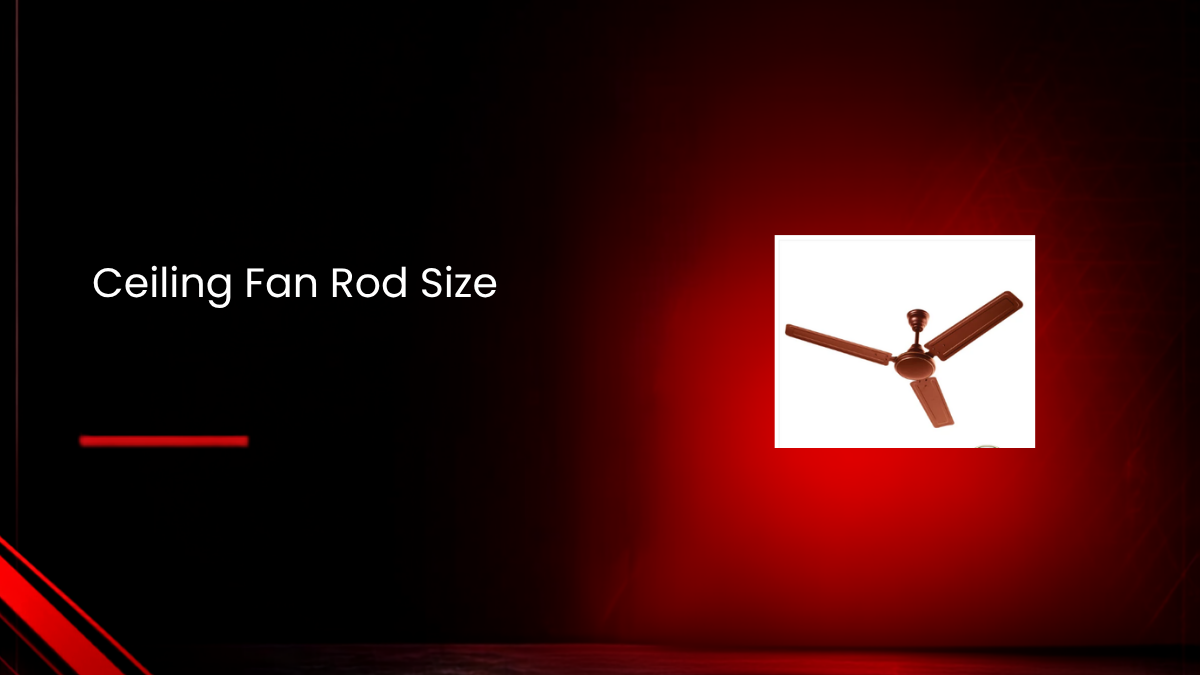
Buying a ceiling fan isn't just about picking a design you like. Getting the ceiling fan rod size right is just as important, since it directly affects airflow, safety, and how the fan looks in your room.
Many buyers overlook this detail, only to end up with a fan that hangs too low, too high, or barely moves any air. Understanding ceiling fan rod size before you buy saves you from this common mistake.
This guide walks through everything you need to know about ceiling fan rod size, from what a downrod actually does to exactly how to calculate the right length for your ceiling. Once you've got the numbers sorted, Rico's ceiling fan range is a solid place to find a model that fits.
What Is a Ceiling Fan Downrod?
A downrod is the metal extension pipe that connects a ceiling fan's motor housing to the ceiling mount. Its job is to lower the fan to an optimal height, positioning the blades far enough from the ceiling for smooth, effective air circulation.
Standard ceiling fan rod size typically ranges from 2 to 60 inches, depending on your ceiling height and room dimensions. Choosing correctly ensures your fan performs efficiently rather than struggling against poor clearance.
Why Ceiling Fan Rod Size Matters So Much

Getting the ceiling fan rod size wrong isn't just a cosmetic issue. It has real consequences for performance and safety.
-
Too short: Blades sit too close to the ceiling, restricting airflow and reducing cooling efficiency.
-
Too long: The fan hangs too low, creating a safety hazard and looking visually out of proportion.
-
Just right: Air circulates smoothly, energy consumption stays efficient, and the fan sits at a comfortable, safe height.
Therefore, calculating the correct ceiling fan rod size isn't optional. It's a core part of getting real value from your fan.
How to Calculate the Right Ceiling Fan Rod Size
Follow this simple method to determine the ideal downrod length for your space.
1. Measure your total ceiling height from floor to ceiling.
2. Subtract the fan's motor housing height, since this varies slightly by model.
3. Subtract the ideal hanging height, typically around 8 feet from the floor to the blades.
4. The remaining figure is your recommended ceiling fan rod size.
This calculation ensures your fan hangs at the height that delivers the best airflow without compromising safety.
Ceiling Fan Rod Size Chart by Ceiling Height
Use this quick reference to match your ceiling height to the appropriate downrod length.
|
Ceiling Height |
Recommended Ceiling Fan Rod Size |
|
8 feet |
No downrod (flush mount) |
|
9 feet |
6 inches |
|
10 feet |
12 inches |
|
11 feet |
18 inches |
|
12 feet |
24 inches |
|
13 feet |
36 inches |
|
14 feet |
48 inches |
|
15 feet or more |
60 inches |
This chart offers a reliable starting point, though it's worth adjusting slightly based on your specific fan model and room layout.
Flush Mount Fans for Low Ceilings
If your ceiling height falls between 7.5 and 8 feet, a standard downrod may not be practical. In these cases, a flush mount fan, also called a hugger fan, works best.
These fans either skip the downrod entirely or use a minimal extension of up to 6 inches, maximising airflow without sacrificing headroom. They're a popular choice for compact apartments, low false ceilings, and smaller rooms.
The Golden Rule of Clearance
Regardless of your ceiling height or chosen ceiling fan rod size, one safety rule remains non-negotiable: maintain a minimum clearance of 7.5 feet between the floor and the fan blades.
To check this, subtract your downrod length and the fan's overall height from your total ceiling height. If the remaining space is at least 90 inches, your fan is positioned safely.
Skipping this check, even with the correct-looking rod size, can result in a fan that sits dangerously low, especially in rooms with taller occupants or furniture underneath.
Matching Blade Span to Room Size
Ceiling fan rod size works alongside another important factor: blade span. Together, these determine how effectively your fan cools a given space.
|
Blade Span |
Ideal Room Size |
Best Suited For |
|
29" to 36" |
Up to 75 sq. ft |
Bathrooms, utility rooms |
|
42" to 48" |
Up to 175 sq. ft |
Bedrooms, kitchens, dining rooms |
|
52" to 56" |
Up to 350 sq. ft |
Large bedrooms, family rooms |
|
60" or larger |
More than 350 sq. ft |
Living rooms, large open spaces |
Pairing the right blade span with the correct ceiling fan rod size ensures balanced airflow throughout the entire room, not just directly beneath the fan.
Downrod Diameter: Another Detail to Check
Beyond length, downrods also come in different diameters, typically either 1/2-inch or 3/4-inch. This measurement must match your specific fan model, since mismatched diameters won't fit the motor housing properly.
If you're purchasing a replacement downrod separately, always confirm compatibility with your existing fan rather than assuming a universal fit. Choosing the same brand as your ceiling fan is usually the safest option here.
Mounting Options Based on Ceiling Type
Ceiling fan rod size decisions also depend on your specific mounting scenario. Here are the main types to consider.
-
Close-to-ceiling mounts: Suited for standard 9-foot ceilings, using a short 3-inch to 5-inch downrod for improved circulation.
-
Flush or hugger mounts: Ideal for ceilings 8 feet or lower, minimising downrod length almost entirely.
-
Extended mounts: Necessary for taller ceilings, using longer rods to bring the fan down to an effective height.
-
Sloped ceiling mounts: Require a specific adapter, since not every fan accommodates angled ceilings without additional hardware.
Identifying your ceiling type early makes choosing the correct ceiling fan rod size much more straightforward.
Common Mistakes to Avoid
Even with the right information, a few common errors can throw off your ceiling fan rod size decision.
-
Guessing instead of measuring: Always measure your exact ceiling height rather than estimating.
-
Ignoring the fan's motor height: This adds to the total hanging height and affects clearance calculations.
-
Choosing based on appearance alone: A rod size that looks proportional isn't always the one that performs best.
-
Overlooking furniture height: Tall wardrobes or loft beds may require additional clearance beyond the standard 7.5-foot rule.
-
Mismatching downrod diameter: Always confirm compatibility before purchasing a separate or replacement rod.
Avoiding these mistakes ensures your fan performs as expected once installed.
Choosing a Ceiling Fan for Your Space
Once you've worked out the right ceiling fan rod size for your room, it's worth looking at models built with reliable motor performance and finish quality to match. Rico's Oric CF2305, a 1200mm BEE 1-Star ceiling fan, features a full MS body and a CCA winding motor designed to perform well even at low voltage, a practical option once you've confirmed the right hanging height for your ceiling.
Similarly, the Oric CF2307, a 1200mm BEE 1-Star ceiling fan, offers the same reliable motor technology in an Aluminum and CRCA body with decorative blades, suited for standard ceiling heights once paired with the appropriate downrod.
Installation Tips Worth Knowing
While professional installation is recommended, understanding the basics helps you communicate your requirements clearly.
-
Always turn off power at the circuit breaker before starting any installation work.
-
Confirm your junction box can safely support the fan's weight before mounting.
-
Attach the downrod and blades to the motor before hanging it onto the mounting bracket.
-
Double-check clearance measurements after installation, not just before, since actual hanging height can shift slightly during mounting.
Building a Well-Cooled Home
Getting ceiling fan rod size right is just one part of setting up effective cooling across your home. If you're also considering portable options for smaller spaces or personal cooling, our guide on portable fans covers compact alternatives that work well alongside a properly installed ceiling fan.
For a broader look at equipping your home with reliable everyday appliances, our roundup of kitchen products covers other essentials worth considering as you plan your space.
Final Thoughts
Choosing the correct ceiling fan rod size comes down to a simple formula: measure your ceiling height, account for your fan's motor size, and maintain that essential 7.5-foot clearance from the floor.
Getting this right isn't just about aesthetics. It directly affects how efficiently your fan cools the room and how safely it operates in daily use. Take the time to measure properly, and your fan will reward you with better airflow and a safer, more comfortable space.
Frequently Asked Questions
Q1. What is the standard ceiling fan rod size for a 9-foot ceiling?
For a standard 9-foot ceiling, a 6-inch downrod is typically recommended to achieve the ideal 8-foot hanging height for the fan blades.
Q2. Do I need a downrod for an 8-foot ceiling?
Usually not. An 8-foot ceiling typically works best with a flush mount or hugger fan, which requires little to no downrod extension.
Q3. How do I know if my ceiling fan rod size is too long?
If the fan blades end up less than 7.5 feet from the floor after installation, the rod size is too long and poses a safety risk.
Q4. Can I use any downrod with any ceiling fan?
Not always. Downrods come in different diameters, typically 1/2-inch or 3/4-inch, so you must confirm compatibility with your specific fan model before purchasing.
Q5. Does ceiling fan rod size affect energy efficiency?
Yes, indirectly. An incorrect rod size can restrict airflow, forcing the fan to work harder and consume more power to achieve the same cooling effect.