
Ceiling Fan RPM: What It Means and Why It Matters When Buying a Fan
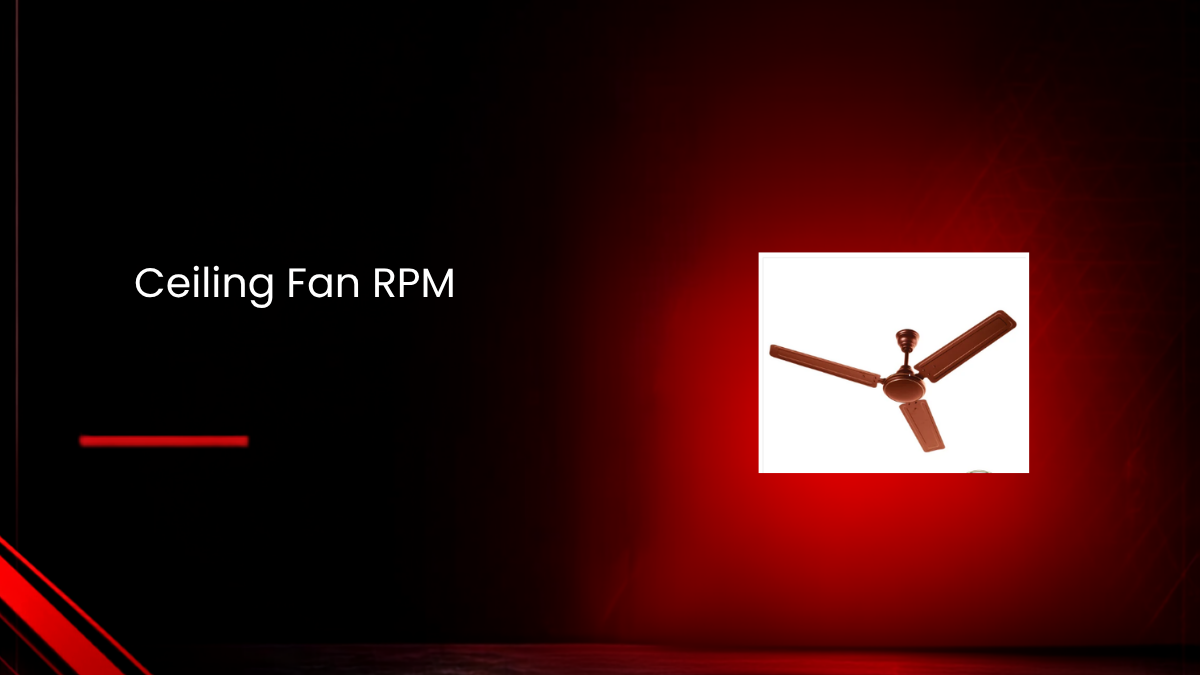
Shopping for a ceiling fan, you've probably noticed the term RPM listed among the specs. But what does ceiling fan RPM actually tell you, and why should it influence your buying decision?
In short, ceiling fan RPM measures how fast the blades spin, and it directly affects how much air the fan moves and how quickly your room feels cooler. Understanding this single number can help you avoid picking a fan that looks great but underperforms.
This guide breaks down everything you need to know about ceiling fan RPM, from what it means to how it varies by room size. If you'd rather skip the research and go straight to browsing, Rico's ceiling fan range includes reliable, well-rated options built for everyday Indian homes.
What Does RPM Mean for a Ceiling Fan?
RPM stands for Revolutions Per Minute, referring to how many complete rotations a fan's blades make in sixty seconds. This single number plays a major role in determining how effectively a fan circulates air across your room.
A higher ceiling fan RPM means the blades spin faster, pushing more air and cooling the room more quickly. A lower RPM, meanwhile, produces a gentler breeze, which suits spaces where you don't need rapid cooling.
Why Ceiling Fan RPM Actually Matters
Understanding ceiling fan RPM isn't just a technical detail. It has real, practical implications for comfort, cost, and everyday use.
 Energy Consumption
A fan with poor RPM performance relative to its power draw wastes electricity without delivering proportional cooling. Knowing your fan's ceiling fan RPM helps you choose a model that balances strong airflow with sensible energy use.
Noise Levels
Fans with well-optimised motors and higher RPM often run quieter than poorly designed alternatives, since efficient motor engineering reduces vibration and friction. This matters especially in bedrooms, where noise can disrupt sleep.
Air Circulation Efficiency
A fan with strong, consistent RPM sustains effective air movement for longer periods, ensuring your room stays comfortably cool rather than only briefly refreshed.
What Factors Influence Ceiling Fan RPM?
Several design elements combine to determine a fan's actual RPM performance. Understanding these helps you compare models more intelligently.
-
Blade design: Blades with wider tips generally deliver higher RPM and move more air than traditional narrow-blade designs.
-
Number of blades: Fans with fewer blades, typically three, face less air resistance and can spin faster than five-blade designs.
-
Motor power and technology: A stronger, well-engineered motor delivers better torque, resulting in higher and more consistent RPM.
-
Blade aerodynamics: Slightly curved blades, known as blade pitch, reduce air resistance and help maximise RPM without sacrificing airflow quality.
-
Room dimensions: Ceiling height and room size influence how effectively a given RPM translates into actual cooling comfort.
-
Environmental conditions: Humid or coastal climates often benefit from higher RPM fans, since faster air movement helps combat sticky, still air more effectively.
Ideal Ceiling Fan RPM by Room Type
Not every space needs the same RPM. Matching your fan's speed to the room it's cooling makes a real difference in comfort.
|
Room Type |
Recommended RPM Range |
Why |
|
Bedrooms |
300-350 RPM |
Gentle, consistent airflow suited for comfortable sleep |
|
Living rooms |
350-450 RPM |
Moderate to strong circulation for shared, active spaces |
|
Large halls |
400+ RPM |
Robust airflow needed to cover larger open areas |
This table offers a useful starting point, though your specific room's ceiling height and layout can shift the ideal choice slightly.
Is a Higher Ceiling Fan RPM Always Better?
Not necessarily. While a high RPM ceiling fan delivers stronger airflow, it isn't automatically the better choice for every situation. Bedrooms, for instance, often benefit more from a moderate RPM that provides comfortable airflow without excessive noise.
Other factors, including blade size, motor efficiency, and overall build quality, matter just as much as raw RPM figures. A fan with excellent RPM but poor blade design may still underperform compared to a well-balanced, moderately rated alternative.
How to Choose the Right RPM Ceiling Fan for Your Home
Follow these steps to make a more informed decision when comparing ceiling fan RPM specifications.
1. Evaluate your room's size. Match your space to the recommended RPM ranges above for a solid starting point.
2. Measure your ceiling height. Taller ceilings often pair well with higher RPM fans and appropriate downrods, while lower ceilings suit flush mount designs.
3. Prioritise energy efficiency alongside RPM. Look for fans that balance strong airflow with sensible power consumption, rather than focusing on RPM alone.
4. Compare models holistically. Once you understand your room's needs, evaluate ceiling fan RPM alongside blade design, motor type, and overall build quality.
Ceiling Fan RPM and Motor Type
Modern fan motors play a significant role in achieving strong, consistent ceiling fan RPM without excessive noise or power draw. Fans built with reliable motor engineering tend to deliver smoother rotation and more dependable long-term performance.
Rico's Oric CF2305, a 1200mm BEE 1-Star ceiling fan, features a CCA winding motor designed to maintain steady performance even during voltage fluctuations, paired with pre-greased double ball bearings that support smoother, quieter rotation over time.
Similarly, the Oric CF2307, a 1200mm BEE 1-Star ceiling fan, uses the same reliable motor and bearing technology in a decorative Aluminum and CRCA body, backed by a 2-year replacement warranty for long-term peace of mind.
Ceiling Fan RPM vs Blade Size: How They Work Together
RPM and blade span work together to determine total airflow, not independently. A fan with high RPM but a small blade span may still underperform in a large room, while a fan with wider blades and moderate RPM can deliver balanced, consistent cooling across bigger spaces.
This is why comparing ceiling fan RPM in isolation, without considering blade size, room dimensions, and mounting height, can lead to a mismatched purchase.
Common Mistakes When Evaluating Ceiling Fan RPM
A few common misunderstandings can lead buyers astray when comparing fans based on RPM alone.
-
Assuming higher RPM always means better performance: Blade design and motor efficiency matter just as much as raw speed.
-
Ignoring room size entirely: A high RPM fan in a small bedroom can feel overpowering and noisy, while a low RPM fan in a large hall may struggle to cool effectively.
-
Overlooking ceiling height and mounting distance: Even a well-rated RPM fan underperforms if it's installed too close to the ceiling, restricting airflow.
-
Focusing only on RPM, not energy consumption: Some high RPM fans draw significantly more power without proportional cooling benefits.
Building a Well-Rounded Cooling Setup
Choosing the right ceiling fan RPM is just one part of setting up effective cooling throughout your home. If you're also considering compact, personal cooling options, our guide on portable fans covers alternatives that work well alongside a properly chosen ceiling fan.
For a broader look at equipping your home with dependable everyday appliances, our roundup of kitchen products covers other essentials worth considering as you plan your space.
Final Thoughts
Ceiling fan RPM might sound like a technical detail buried in the spec sheet, but it directly shapes how comfortable your room feels day to day. A higher RPM delivers stronger airflow, while a moderate RPM often suits bedrooms better, thanks to quieter, gentler circulation.
Ultimately, the best choice isn't simply the fan with the highest RPM number. It's the one that balances RPM with blade design, motor efficiency, and your room's specific size and layout. Taking a few extra minutes to compare these factors together ensures you end up with a fan that genuinely performs well in your space.
Frequently Asked Questions
Q1. What is a good RPM for a ceiling fan?
A ceiling fan with an RPM between 300 and 400 is generally considered solid for most rooms, offering a comfortable breeze without excessive noise or power draw. The exact ideal figure varies by room size.
Q2. Is a higher ceiling fan RPM always better?
Not necessarily. While higher RPM delivers stronger airflow, factors like blade design, motor efficiency, and room size matter just as much for overall performance and comfort.
Q3. What ceiling fan RPM is best for bedrooms?
Bedrooms typically suit a range of 300 to 350 RPM, providing gentle, comfortable airflow suited for restful sleep without excessive noise.
Q4. Does ceiling fan RPM affect electricity consumption?
Yes, indirectly. Fans with efficient motors can achieve high RPM without excessive power draw, while poorly designed fans may consume more electricity for similar airflow output.
Q5. How does room size affect the ideal ceiling fan RPM?
Larger rooms generally benefit from higher RPM, typically above 400, to ensure adequate air circulation across the space, while smaller rooms like bedrooms perform well with moderate RPM around 300 to 350.