
Is It Better to Steam or Iron Clothes? A Complete Comparison
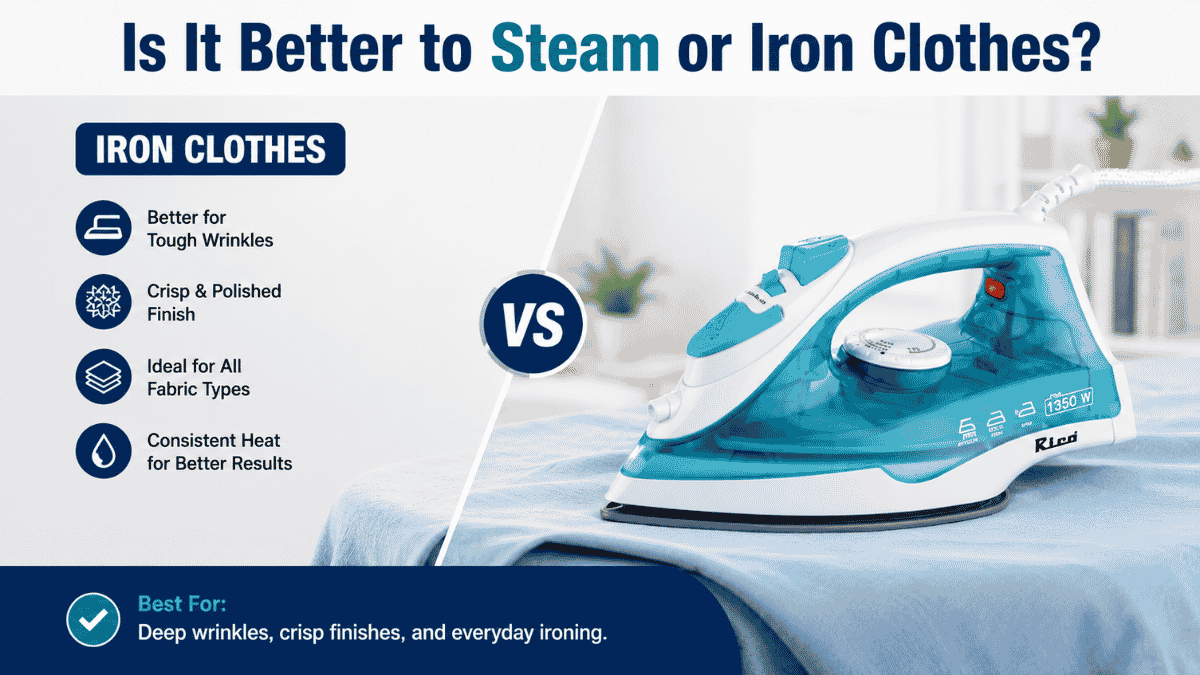
If you've ever stood in front of a wrinkled shirt wondering whether to reach for an iron or a steamer, you're not alone. Both tools remove creases, but they work very differently.
So, is it better to steam or iron clothes? The honest answer depends on the fabric, the garment type, and how much time you have. This guide breaks down both methods so you can choose confidently.
If you're looking for reliable garment care solutions, rico.in offers a wide range of high-quality dry irons and steam irons designed to suit different fabrics and everyday ironing needs. Whether you're ironing delicate garments or heavy fabrics, Rico's appliances are built for efficient performance and ease of use.
How Ironing Works
Ironing uses direct heat and pressure to flatten fabric fibres. A hot soleplate presses down on the garment, smoothing out wrinkles through heat and physical force combined.
Most irons also release steam through small vents to loosen fabric fibres before pressing. Therefore, ironing combines both heat and mechanical pressure, which is why it works so well on stubborn creases.
How Steaming Works
Garment steamers, on the other hand, rely purely on hot vapour. There's no direct contact or pressure involved. Instead, steam penetrates the fabric, relaxing the fibres and allowing wrinkles to fall out naturally.
Since there's no pressing action, steaming is inherently gentler on fabric. However, it may not fully flatten deep creases the way an iron can, especially on heavier materials.
Steaming vs Ironing: Key Differences
Here's a side-by-side look at how these two methods compare:
|
Factor |
Ironing |
Steaming |
|
Method |
Heat + pressure |
Heat + vapour only |
|
Best For |
Cotton, linen, structured garments |
Delicate fabrics, silk, suits |
|
Speed |
Faster for flat items |
Faster for hanging garments |
|
Crease Removal |
Sharp, crisp results |
Softer, relaxed results |
|
Fabric Safety |
Risk of scorching if misused |
Lower risk of fabric damage |
|
Setup Required |
Ironing board needed |
Can be done on a hanger |
|
Portability |
Less portable |
Often more portable |
This comparison shows that neither method is universally superior. Ultimately, your fabric type and desired finish determine the better choice.
When Ironing Is the Better Choice
Ironing works best in these situations:
-
You need sharp, crisp creases, like on dress shirts or trousers
-
You're working with cotton, linen, or other structured fabrics
-
You want a polished, professional finish for formal wear
-
You're pressing flat items like tablecloths or bedsheets
Moreover, ironing remains the go-to method for garments that require defined pleats or creases, which steaming simply can't replicate.
When Steaming Is the Better Choice

Steaming, however, shines in different scenarios:
-
You're handling delicate fabrics like silk, chiffon, or velvet
-
You need to quickly freshen up hanging garments or suits
-
You want to avoid shine marks or scorching on sensitive materials
-
You're travelling and need a compact, board-free solution
For daily quick touch-ups, especially on garments already hanging in your closet, steaming often saves significant time.
Which Fabrics Should Be Ironed vs Steamed?
Understanding fabric compatibility helps you decide faster:
Best for Ironing:
-
Cotton and linen shirts
-
Denim and heavy cotton
-
Tablecloths and bedsheets
Best for Steaming:
-
Silk and satin garments
-
Wool suits and blazers
-
Velvet and delicate synthetics
In addition, some fabrics like polyester blends can go either way, depending on the finish you prefer.
Speed and Convenience Comparison
If you're short on time, steaming often has the edge for hanging garments. You simply glide the steamer down the fabric without needing a board or flat surface.
However, ironing is generally faster for flat items like bedsheets or large tablecloths, where a steamer would take significantly longer to achieve the same smoothness.
Safety Considerations for Both Methods
Both tools carry some risk if used incorrectly. Irons can scorch fabric if left in one spot too long or used at the wrong temperature setting.
Steamers, meanwhile, produce hot vapour that can cause burns if handled carelessly. Therefore, regardless of which method you choose, following manufacturer safety guidelines is essential.
Can You Use Both Methods Together?
Many households find that combining both tools offers the best results. You might steam a suit for quick daily wear but iron dress shirts for sharper, more formal creases.
This hybrid approach lets you match the method to the garment rather than committing to just one tool for everything. Ultimately, having both options available offers maximum flexibility for different fabric types and occasions.
Choosing the Right Iron for Your Needs

If you decide ironing suits your lifestyle better, choosing the right iron matters just as much as the method itself. Factors like soleplate quality, steam output, and weight all affect performance.
For instance, our guide on heavy weight vs light weight iron box explains how iron weight impacts pressing power and ease of use, helping you pick a model suited to your ironing habits.
Appliance Trade-Offs Extend Beyond Garment Care
This "speed versus gentleness" trade-off isn't unique to ironing and steaming. It appears across many home appliances. For example, our comparison of centrifugal vs slow juicer shows a similar balance between fast processing and gentler, nutrient-preserving results.
Likewise, our breakdown of wet grinder vs mixer grinder highlights how different appliance designs suit different tasks, much like choosing between an iron and a steamer.
Compact Appliances for Everyday Convenience
Portability often matters as much as performance. Just as a portable fan is valued for being lightweight and easy to move around the house, a compact garment steamer offers similar convenience for quick touch-ups without setup hassle.
Setting Up Your Home for Both Methods
If you're building out your laundry and kitchen essentials together, our guide to essential kitchen products offers a useful starting point for household appliance planning beyond just garment care.
Maintenance Tips for Irons and Steamers
Regardless of which method you choose, proper maintenance extends appliance life:
-
Use distilled or filtered water to prevent mineral buildup
-
Clean the soleplate or steam nozzle regularly
-
Store both appliances upright to avoid water leakage
-
Avoid overfilling water tanks beyond the recommended level
These simple habits keep either tool performing reliably for years.
Conclusion
So, is it better to steam or iron clothes? The answer depends on your fabric type, desired finish, and daily routine. Ironing delivers sharp, crisp results ideal for structured fabrics like cotton and linen, while steaming offers a gentler, faster solution for delicate materials and hanging garments.
Rather than choosing one method exclusively, many households benefit from using both tools depending on the occasion. Ultimately, understanding these differences helps you protect your fabrics while achieving the finish you want, every time.
FAQs
1. Is steaming clothes as effective as ironing?
Steaming relaxes fabric fibres gently but may not achieve the same crisp, sharp creases as ironing, especially on structured fabrics.
2. Can steaming damage clothes less than ironing?
Generally, yes. Steaming avoids direct contact and pressure, reducing the risk of scorching or shine marks compared to ironing.
3. Which is faster - steaming or ironing?
Steaming is often faster for hanging garments, while ironing is quicker for flat items like bedsheets or tablecloths.
4. Can I steam clothes without taking them off the hanger?
Yes, that's one of steaming's biggest advantages - you can freshen up garments directly on a hanger without needing a board.
5. Should I buy both an iron and a steamer?
If your wardrobe includes a mix of delicate and structured fabrics, owning both tools offers the most flexibility for different garment types.