
Mini Chopper vs Food Processor: Which One Actually Fits Your Kitchen?
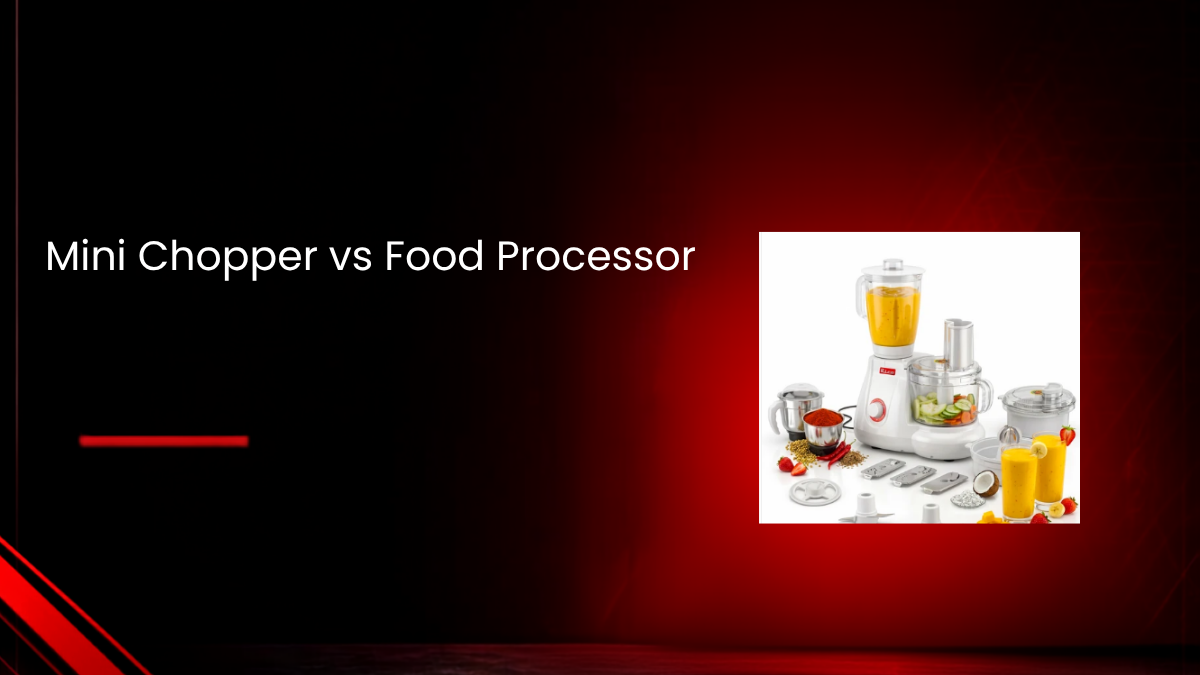
Scrolling through kitchen appliance listings, you've likely come across both a mini chopper food processor combo deal and standalone options for each. But are these two appliances really interchangeable, or do they serve genuinely different purposes?
The short answer is that a mini chopper and a food processor overlap only slightly. One is built for quick, small-batch chopping, while the other handles a much wider range of prep tasks at a larger scale.
This guide breaks down the real differences, so you can decide whether a mini chopper, a full-sized food processor, or a mini chopper food processor combination actually suits your kitchen. If you'd rather browse ready-made options, Rico's range of kitchen appliances is a good place to start comparing.
What's the Real Difference?
A mini chopper is a small, single-purpose appliance built to chop, mince, and dice ingredients quickly in a compact bowl, typically ranging from 250ml to 500ml. It's designed for speed and simplicity, not versatility.
A food processor, on the other hand, is a larger, multi-purpose appliance with interchangeable blades and discs, handling everything from slicing and shredding to dough kneading, in a much bigger bowl, often between 1,000ml and 3,000ml.
Think of it this way: a mini chopper is like a single, sharp tool built for one job. A food processor is closer to a full toolkit, capable of many tasks, but requiring more setup, space, and cleanup time.
Mini Chopper vs Food Processor: Quick Comparison
|
Feature |
Mini Chopper |
Food Processor |
|
Capacity |
250ml–500ml |
1,000ml–3,000ml |
|
Counter space |
Fits in a drawer |
Needs dedicated counter space |
|
Setup time |
A few seconds |
1–2 minutes |
|
Chops vegetables |
Yes, small batches |
Yes, larger batches |
|
Kneads dough |
No |
Yes |
|
Slices and grates |
No |
Yes, with disc attachments |
|
Cleaning time |
Quick, minimal parts |
Longer, multiple components |
|
Best for |
Daily chopping, small households |
Larger households, baking, batch prep |
When a Mini Chopper Is Genuinely Enough
For many Indian households, especially smaller families, a mini chopper alone covers most daily prep needs. Everyday cooking often just requires finely chopped garlic, ginger, onions, and green chillies, tasks a mini chopper handles in under a minute.
A mini chopper makes the most sense if:
-
You're cooking for one to four people daily
-
Your main prep involves garlic, ginger, onions, and similar small ingredients
-
Counter space in your kitchen is limited
-
You want something quick to grab, use, and rinse clean
-
You don't need dough kneading or slicing capabilities
When You Actually Need a Full Food Processor
A food processor earns its larger footprint when your cooking involves tasks beyond basic chopping. If you regularly knead atta dough, slice vegetables for salads, or grate cheese in bulk, this appliance genuinely saves time.
Consider a food processor if:
-
You cook for larger families or in bigger batches regularly
-
You bake and need dough kneading for bread, pizza, or similar recipes
-
You want uniform, thin slices for salads or garnishes
-
You grate large quantities of cheese, coconut, or vegetables
-
You prepare batters, purees, or nut butters often
If you already own a mixer grinder, which most Indian kitchens do, a food processor adds genuinely new capabilities like slicing, grating, and kneading that a mixer grinder simply isn't designed for. Our comparison of wet grinder vs mixer grinder explains what a mixer grinder handles well, for context.
Do You Actually Need Both?
For most households of two to four people, a mini chopper paired with an existing mixer grinder covers most daily kitchen tasks. The mini chopper handles quick chopping, while the mixer grinder handles wet grinding and blending, covering most needs without a separate food processor.
For larger joint families, particularly those who also bake regularly, adding a full food processor makes more sense. Even then, many households still reach for a mini chopper for quick garlic-ginger prep, simply because a food processor takes longer to assemble and clean for such a small task.
Setup and Cleaning: A Practical Consideration
This is where the mini chopper food processor decision often comes down to daily convenience rather than raw capability. A mini chopper typically has just three parts: bowl, blade, and lid, rinsing clean in a minute or two.
A food processor, with five to eight parts depending on the attachments used, generally takes five to ten minutes to clean thoroughly, since food can get trapped in grooves around blades and discs.
If you're chopping vegetables multiple times a day, this cleaning time difference adds up quickly. Our comparison of manual vs electric vegetable choppers explores similar convenience trade-offs worth considering alongside this decision.
Counter Space and Kitchen Size
Indian kitchens, especially in apartments, often have limited counter space, making this a genuinely practical factor in the mini chopper food processor decision.
A mini chopper typically needs just a small footprint and stores easily in a drawer when not in use. A food processor, by contrast, generally requires dedicated counter space and enough vertical clearance for its taller design, making it less practical for compact kitchens unless you have room to spare.
Price Considerations
Budget also plays a meaningful role in this decision. Mini choppers are generally much more affordable than food processors because of their simpler, single-purpose design.
Food processors cost considerably more, reflecting their larger capacity, multiple attachments, and broader functionality. If your cooking needs mainly involve quick chopping, a mini chopper offers strong value without the added cost of features you may not use regularly.
Motor Power Considerations
Whichever appliance you choose, motor strength affects how well it handles denser or larger batches of ingredients. If you're evaluating power specifications across kitchen appliances, our breakdown of the difference between 550W and 750W mixer grinders explains how wattage affects performance under sustained use, a principle relevant to both choppers and food processors.
Can a Food Processor Replace Your Mixer Grinder?
Not entirely. A food processor handles chopping, slicing, grating, and kneading well, but a mixer grinder remains better suited for fine pastes, spice powders, and traditional Indian batters.
Most Indian kitchens benefit from keeping both appliances, since each covers distinct needs. If you're curious about your mixer grinder's full range of capabilities, our guide on how to use a juicer mixer grinder walks through different jar functions that complement what a food processor or mini chopper offers.
Attachments Worth Knowing About
If you do opt for a full food processor, understanding its various attachments helps you get the most value from the purchase. Beyond the standard chopping blade, many models include a whisk attachment for eggs and cream.
If you're curious how similar attachments work across kitchen appliances, our guide on what a whip in a mixer grinder does explains a comparable mechanism used to aerate ingredients.
Making the Right Choice for Your Household
Ultimately, the mini chopper food processor decision comes down to matching the appliance to your actual cooking habits, not just available features.
-
Small household, simple daily chopping: A mini chopper alone is likely sufficient.
-
Larger household with regular baking or batch prep: A food processor adds genuine value.
-
Occasional need for both: Start with a mini chopper and add a food processor later if your needs grow.
If you're weighing similar buying considerations for other kitchen appliances, our guide on how to choose the right mixer grinder offers a useful framework that applies broadly to appliance shopping decisions like this one.
Building a Well-Equipped Kitchen
Whether you choose a mini chopper, a full food processor, or both, these tools work best alongside a well-rounded set of everyday appliances. Our roundup of kitchen products covers other essentials worth considering as you plan your kitchen setup.
If smoothies or thicker blends are also part of your routine, our comparison of slow juicer vs blender covers related trade-offs in texture and processing power across blending appliances.
Final Thoughts
The mini chopper food processor comparison ultimately comes down to scale and versatility. A mini chopper wins on speed, convenience, and affordability for everyday chopping, while a food processor earns its place when your cooking demands slicing, grating, or dough kneading at a larger scale.
For most smaller households, a mini chopper alongside an existing mixer grinder covers nearly everything you need. Larger families with broader cooking and baking needs will likely find real value in adding a full food processor.
Frequently Asked Questions
Q1. Can a mini chopper knead dough like a food processor?
No. Mini choppers have thin, fast blades designed for chopping, not kneading. For dough, you need a food processor with a dedicated dough blade or a stand mixer.
Q2. Is a food processor worth buying if I already have a mixer grinder?
Yes, if you regularly slice, grate, or knead dough. A mixer grinder handles fine pastes and powders well, but doesn't replace these specific food processor functions.
Q3. How much counter space does a food processor typically need?
A standard food processor generally needs a dedicated section of counter space along with enough vertical clearance for its taller design, more than a compact mini chopper requires.
Q4. Which is easier to clean: a mini chopper or a food processor?
A mini chopper, generally. With just a few simple parts, it rinses clean quickly, while a food processor's multiple attachments and grooves typically take longer to clean thoroughly.
Q5. Is a mini chopper enough for a family of four?
For garlic, ginger, and similar small ingredients, yes. For larger quantities like onions chopped daily, a slightly bigger capacity chopper or a food processor may suit larger families better.