
What Is a BLDC Ceiling Fan? Benefits & Working Guide
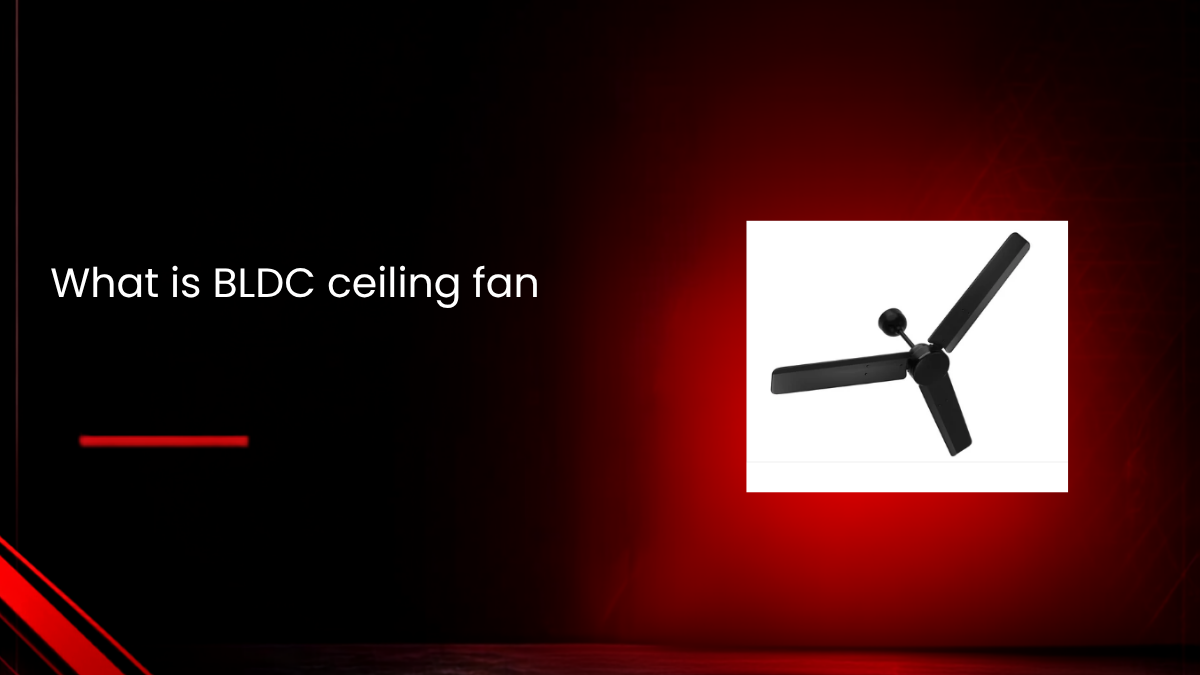
If you've shopped for a ceiling fan recently, you've likely come across this term. So, what is a BLDC ceiling fan, and why is it suddenly everywhere in appliance stores and online listings?
In short, a BLDC ceiling fan uses Brushless Direct Current motor technology instead of the traditional induction motor found in regular fans. This single change dramatically improves energy efficiency, noise levels, and overall performance.
This guide breaks down exactly what a BLDC ceiling fan is, how it works, its benefits, and whether it's worth the higher upfront cost. If you're already convinced and want to compare models, Rico's range of energy-efficient fans is worth a look.
What Is a BLDC Ceiling Fan, Exactly?
A BLDC ceiling fan runs on Brushless Direct Current technology, using electronic circuitry and permanent magnets to power the motor instead of traditional brushes. This design eliminates the friction that conventional AC motors generate.
Since there's no physical contact between brushes and the motor, energy loss drops significantly. Consequently, understanding what a BLDC ceiling fan is really comes down to understanding this fundamental shift in how the motor operates.
How Does BLDC Motor Technology Work?
To fully answer what a BLDC ceiling fan is, it helps to look inside the motor itself. A BLDC motor relies on three key components working together.
-
Permanent magnets: These generate the rotational movement needed to spin the fan blades.
-
Electronic controllers: These regulate motor speed and torque precisely, without mechanical wear.
-
Hall sensors: These detect the rotor's position continuously, ensuring smooth, consistent movement.
This combination minimises heat generation and mechanical wear, making BLDC motors more efficient and longer-lasting than conventional alternatives.
Key Benefits of a BLDC Ceiling Fan
Now that you understand what a BLDC ceiling fan is at a technical level, let's look at why so many households are switching to this technology.
1. Significant Energy Savings
This is the standout benefit. A conventional ceiling fan typically consumes 70 to 80 watts of power, while a BLDC fan uses only 25 to 35 watts, a reduction of roughly 50 to 65%.
Over a year of daily use, this difference translates into meaningfully lower electricity bills. If you're evaluating appliance wattage more broadly, our breakdown of the difference between 550W and 750W mixer grinders explains a similar principle: lower power draw doesn't always mean lower performance.
2. Longer Lifespan
Since BLDC motors don't rely on brushes, there's minimal friction and wear over time. This design naturally extends the fan's operational life and reduces maintenance costs compared to traditional motors.
3. Quieter Operation
Conventional fans often produce a noticeable hum or buzz due to friction between moving parts. BLDC fans, by contrast, run remarkably quietly, making them ideal for bedrooms and study spaces.
If noise reduction is a priority across your home appliances, our guide on how to reduce the noise of a mixer grinder shares maintenance principles that apply broadly to motor-driven devices, including fans.
4. Smart Features
Many BLDC fans come equipped with remote controls, variable speed settings, timer functions, and even smart home integration. This added convenience is a major reason buyers are drawn to this technology.
5. Stable Performance During Voltage Fluctuations
Unlike traditional fans that slow down noticeably during voltage drops, BLDC fans maintain consistent airflow even under fluctuating power conditions. This makes them particularly well-suited to areas with inconsistent electricity supply.
6. Lower Heat Generation
With no brushes creating friction, BLDC motors generate significantly less heat, even during extended use. This improves safety and long-term durability.
7. Inverter Compatibility
Since BLDC fans draw so little power, they work exceptionally well on backup power and inverters, running for extended periods without straining limited battery capacity. This is especially useful during frequent power cuts.
If you rely on backup power for other appliances too, our guide on using a mixer grinder on an inverter explains similar load considerations worth understanding alongside your fan's power draw.
BLDC Fan vs Normal Fan: Quick Comparison
|
Factor |
BLDC Fan |
Normal Fan |
|
Power consumption |
25–35W |
70–80W |
|
Noise level |
Quiet operation |
Noticeable hum |
|
Performance stability |
Steady, even during voltage drops |
Slows during fluctuations |
|
Control options |
Remote, timer, smart features |
Wall regulator only |
|
Heat generation |
Minimal |
Higher |
|
Upfront cost |
Higher |
Lower |
|
Long-term running cost |
Lower |
Higher |
Rico's Ceiling Fan Options: Conventional vs BLDC
If you're shopping for a ceiling fan today, it helps to see this technology choice reflected in real products, not just specs on paper.
Rico's Oric CF2305, a 1200mm BEE 1-Star ceiling fan, is a solid example of the conventional side of this comparison. It runs on a standard CCA winding motor with a full MS body, priced at Rs. 3,000, and comes with a 2-year replacement warranty, pre-greased double ball bearings for quieter operation, and reliable air throw even at lower voltage.
Similarly, the Oric CF2307, a 1200mm BEE 1-Star ceiling fan, offers the same CCA motor and double ball bearing design in an Aluminum + CRCA body with decorative blades, priced at Rs. 3,250, also backed by a 2-year replacement warranty.
Both are dependable, budget-friendly picks if a lower upfront cost matters more to you than the energy savings a BLDC motor delivers. That said, since this guide is specifically about BLDC technology, it's worth noting these two models are conventional fans, not BLDC ones. If you want a true like-for-like comparison, Rico's Oric CF2501/CF2502 BLDC range (5-Star rated) would be the more accurate product to feature alongside the benefits discussed above.
Is a BLDC Ceiling Fan Worth the Higher Price?
BLDC fans typically cost more upfront than conventional models. However, the significant reduction in power consumption often pays for this difference within a couple of years, depending on usage.
If you run your ceiling fan for several hours daily, the electricity savings from a BLDC fan add up quickly. Over its lifespan, a BLDC fan can save 30 to 50% on the portion of your electricity bill tied to fan usage.
Who Should Consider a BLDC Ceiling Fan?
Understanding what a BLDC ceiling fan is is only half the equation. Knowing whether it fits your household matters just as much.
A BLDC ceiling fan makes sense if:
-
You run fans for extended hours daily, making energy savings meaningful
-
You experience frequent power cuts and rely on inverter backup
-
Quiet operation matters for bedrooms or workspaces
-
You want smart features like remote control and timers
-
You're comfortable with a higher upfront investment for long-term savings
A conventional fan may still suit you if:
-
Your budget prioritises lower upfront cost
-
You use fans only occasionally, reducing the impact of energy savings
-
You don't need smart features or remote functionality
Common Uses of BLDC Fans
BLDC fan technology isn't limited to just bedrooms and living rooms. Its efficiency makes it suitable across several settings.
-
Homes and apartments: Comfortable, energy-efficient cooling for daily use
-
Offices and retail spaces: Reduced electricity costs across multiple units
-
Industrial spaces: Continuous air circulation in warehouses and factories
-
Smart homes: Seamless integration with IoT-based home automation systems
Maintenance Considerations for BLDC Fans
While BLDC fans require less maintenance than conventional models due to their brushless design, a few habits still help maintain performance over time.
-
Clean the blades regularly to prevent dust buildup, which can affect airflow efficiency.
-
Check remote or smart control connectivity periodically if your model includes these features.
-
Avoid exposing the motor housing to excess moisture, especially in humid climates.
-
Refer to the manufacturer's guidelines for any firmware or smart feature updates, if applicable.
Since BLDC motors have fewer moving parts than traditional designs, maintenance needs are generally lower, though regular cleaning still matters for consistent airflow.
How BLDC Technology Compares Across Home Appliances
The efficiency principles behind BLDC fans reflect a broader shift toward smarter, more energy-conscious appliance design. If you're building out your broader appliance collection with efficiency in mind, our roundup of kitchen products covers other everyday essentials worth considering for a well-equipped, energy-efficient home.
Similarly, appliance durability considerations extend beyond fans. Our comparison of heavyweight vs lightweight iron boxes explores how build quality and design choices affect long-term performance, a useful parallel when evaluating BLDC technology too.
Final Thoughts
So, what is a BLDC ceiling fan, in summary? It's a modern ceiling fan powered by brushless motor technology that dramatically cuts electricity consumption, runs quieter, and offers smarter features than conventional models.
While the upfront cost is higher, the long-term savings on electricity bills, combined with quieter operation and better inverter compatibility, make BLDC fans a genuinely smart upgrade for most Indian households.
Ultimately, if you're replacing an old fan or setting up a new space, understanding what a BLDC ceiling fan is helps you make a more informed, future-ready choice.
Frequently Asked Questions
Q1. What is a BLDC ceiling fan and how is it different from a normal fan?
A BLDC ceiling fan uses brushless motor technology with electronic controllers instead of traditional brushes, resulting in lower power consumption, quieter operation, and longer motor life compared to normal fans.
Q2. How much electricity does a BLDC ceiling fan save?
BLDC fans typically consume 25 to 35 watts, compared to 70 to 80 watts for conventional fans, saving roughly 30 to 50% on fan-related electricity costs annually.
Q3. Are BLDC fans suitable for use with inverters?
Yes, and quite well. Since BLDC fans draw very little power, they run efficiently on backup power for extended periods without straining limited inverter capacity.
Q4. Do BLDC fans come with remote control features?
Most BLDC fans include remote control functionality, along with timer settings and variable speed control. Some premium models also support smart home integration.
Q5. Is a BLDC ceiling fan worth the higher upfront cost?
For most households running fans for several hours daily, yes. The electricity savings typically offset the higher initial price within a couple of years, making it a worthwhile long-term investment.