
How to Clean Immersion Rod: A Complete Step-by-Step Guide
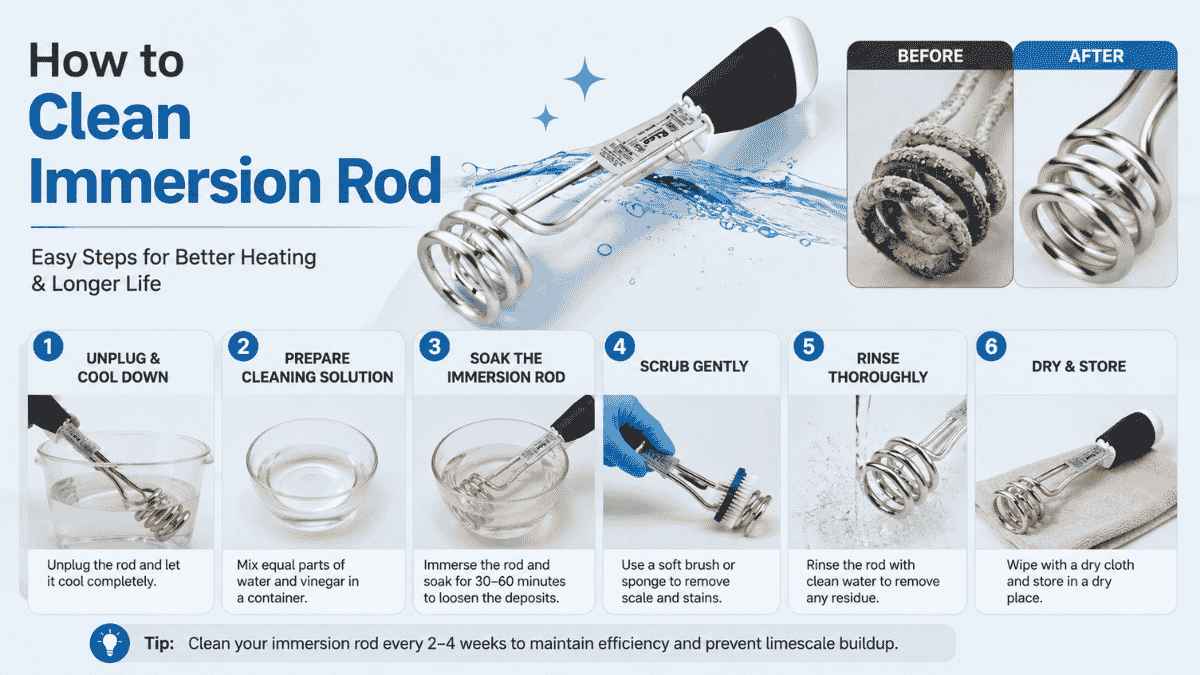
Hard water leaves a trail of scale and mineral deposits on every heating appliance it touches. If you're wondering how to clean immersion rod build-up safely, you're not alone, since this is one of the most common maintenance questions among immersion rod owners.
A dirty, scaled-up rod doesn't just heat water slower. It also draws more power and wears out faster. Fortunately, learning how to clean immersion rod deposits at home takes only basic household items and a few careful steps.
This guide walks you through the full process, along with safety tips, maintenance frequency, and answers to common questions.
If you're looking for reliable water heating appliances, Rico offers a wide range of home appliances, including immersion rods, geysers, room heaters, mixer grinders, and other everyday essentials. Rico products are designed to combine safety, energy efficiency, and durable quality, making them well-suited for Indian homes and varying seasonal needs.
Why Immersion Rods Need Regular Cleaning
Every time you heat water, dissolved minerals like calcium and magnesium settle onto the rod's surface. Over time, this forms a hard, chalky layer known as scale.
This scale acts as an insulator, forcing the rod to work harder and longer to heat the same amount of water. Consequently, your electricity bill quietly increases, even though nothing else about your usage has changed.
Moreover, thick scale buildup can eventually damage the heating element itself. Therefore, understanding how to clean immersion rod deposits regularly protects both your appliance and your wallet.
Signs Your Immersion Rod Needs Cleaning
Before diving into the cleaning process, it helps to recognise the warning signs. Watch for these indicators:
-
Water takes noticeably longer to heat than before
-
Visible white or grey flaky deposits on the rod's surface
-
A burning or unusual smell during use
-
Increased electricity consumption for the same heating routine
-
Rust spots or discolouration on the metal casing
If you notice any of these signs, it's time to learn how to clean immersion rod scale before the problem worsens.
Safety First: Before You Start Cleaning
Immersion rods involve both electricity and water, so safety must come first. Follow these precautions every time.
-
Always unplug the rod from the power socket before handling it.
-
Let the rod cool down completely if it was recently in use.
-
Never clean the rod while it's still connected to power.
-
Keep children away from the cleaning area throughout the process.
-
Use only non-conductive materials, like plastic or rubber gloves, while handling the rod.
These precautions apply regardless of which Rico model you own. Whether you're maintaining the Rico Immersion Rod IR2514, a 2000W shockproof model, or a smaller unit, safety steps remain the same.
What You'll Need
Gather these simple items before you begin the cleaning process.
-
White vinegar or a mild descaling solution
-
A soft brush or old toothbrush
-
A plastic or non-metal scraper
-
A bucket for soaking
-
A clean, dry cloth
Avoid steel wool or harsh metal scrubbers, since these can scratch the rod's protective coating and cause corrosion over time.
How to Clean Immersion Rod: Step-by-Step Process
Step 1: Unplug and Remove the Rod
Always start by disconnecting the immersion rod from the power source. Once unplugged, carefully remove it from the bucket or container it was heating water in.
Step 2: Rinse Off Loose Debris
Rinse the rod under running water to remove any loose dirt or floating particles. This makes the deeper cleaning process more effective.
Step 3: Soak in a Vinegar Solution
Mix equal parts white vinegar and water in a bucket. Submerge the heating element portion of the rod completely, and let it soak for 1 to 2 hours.
For heavier scale buildup, soaking overnight often works best. The acidic vinegar gradually breaks down mineral deposits, making them easier to remove.
Step 4: Scrub Gently
After soaking, use a soft brush or old toothbrush to gently scrub away the loosened scale. Focus on the coil and joint areas, where deposits tend to accumulate most.
Avoid using excessive force, since the coating on the element can be damaged if scrubbed too aggressively.
Step 5: Rinse Thoroughly
Rinse the rod under clean running water to remove all traces of vinegar and loosened scale. This step matters, since leftover vinegar residue can affect water taste during future use.
Step 6: Dry Completely
Wipe the rod down with a dry cloth, then let it air dry completely before reconnecting it to power. Never plug in a rod that's still damp, as this poses a serious safety risk.
Step 7: Inspect Before Reuse
Once dry, inspect the rod for any remaining scale, cracks, or signs of wear. If everything looks clean and intact, your rod is ready to use again.
How Often Should You Clean Your Immersion Rod?
Cleaning frequency largely depends on your water hardness. Here's a general guideline to follow.
-
Hard water areas: Clean every 4 to 6 weeks
-
Moderately hard water: Clean every 2 to 3 months
-
Soft water areas: Clean every 4 to 6 months
If you're unsure about your water hardness, keep an eye on heating performance instead. A noticeable slowdown in heating time usually signals it's time to clean.
Common Mistakes to Avoid
Even with good intentions, certain habits can damage your immersion rod during cleaning. Avoid these mistakes.
-
Cleaning while still plugged in: This is a serious safety hazard and should never be attempted.
-
Using metal scrapers or steel wool: These scratch the protective coating and speed up corrosion.
-
Skipping the rinse step: Leftover vinegar can affect water taste and smell.
-
Reconnecting a wet rod: Always ensure complete dryness before plugging it back in.
-
Ignoring early warning signs: Delaying cleaning allows scale to harden further, making it much tougher to remove later.
Tips to Reduce Future Scale Buildup
A few preventive habits can significantly reduce how often you need to clean your rod.
-
Avoid leaving the rod submerged in standing water for longer than necessary.
-
Wipe down the rod after each use, if practical, to prevent mineral residue from settling.
-
Consider using a water softener if your area has particularly hard water.
-
Store the rod in a dry place when not in use, rather than leaving it in a damp bucket.
Choosing a Rod That's Easier to Maintain
If your current rod has become difficult to clean due to years of heavy scale buildup, it may be more practical to consider a newer model. Lighter designs, in particular, are often easier to handle during cleaning sessions.
The Rico Immersion Rod IR1412, a compact 1500W model, weighs just 460 grams, making it noticeably easier to lift, soak, and scrub compared to bulkier alternatives.
Similarly, if you need a smaller, budget-friendly option for occasional use, the Rico Immersion Rod IR1410, a 1000W model, is lightweight and easy to maintain, thanks to its compact 422-gram build.
Maintenance Habits That Extend Rod Life
Cleaning is just one part of overall appliance care. A few additional habits can extend your rod's working life significantly.
-
Avoid running the rod outside the manufacturer's recommended water level range.
-
Check the cord and plug periodically for any signs of wear or damage.
-
Store the rod safely when not in use, away from moisture and dust.
-
Handle the rod gently during cleaning to avoid bending or damaging the coil.
Interestingly, similar care principles apply across other heating appliances at home. Our comparison of heavyweight vs lightweight iron boxes explores how build quality and weight affect long-term durability, a useful parallel when choosing or maintaining an immersion rod.
Building a Well-Maintained Home Appliance Set
Keeping your immersion rod clean is just one part of overall home appliance care. If you're looking to round out your household essentials, our roundup of kitchen products covers other everyday appliances worth considering for a well-equipped home.
Final Thoughts
Learning how to clean immersion rod scale properly comes down to a few consistent habits: soaking in vinegar, gentle scrubbing, thorough rinsing, and complete drying before reuse.
Regular cleaning, done every few weeks to months depending on your water hardness, keeps your rod heating efficiently and safely for years. Ultimately, a few minutes of maintenance now saves you from slower heating, higher bills, and premature appliance failure later.
Frequently Asked Questions
Q1. Can I use vinegar to clean an immersion rod?
Yes, white vinegar is one of the most effective and safe options. Soak the rod in a vinegar-water solution for 1 to 2 hours to loosen mineral scale before scrubbing gently.
Q2. How often should I clean my immersion rod?
This depends on water hardness. Hard water areas may need cleaning every 4 to 6 weeks, while soft water areas can go 4 to 6 months between cleanings.
Q3. Is it safe to clean an immersion rod while it's plugged in?
No, never. Always unplug the rod and let it cool completely before starting any cleaning process, since water and live electricity together pose a serious safety risk.
Q4. What happens if I don't clean my immersion rod regularly?
Scale buildup insulates the heating element, making it work harder and consume more electricity. Over time, this can also damage the rod permanently.
Q5. Can I use a metal scraper to remove scale from my immersion rod?
It's best to avoid metal scrapers, since they can scratch the protective coating and speed up corrosion. Stick to soft brushes or plastic scrapers instead.